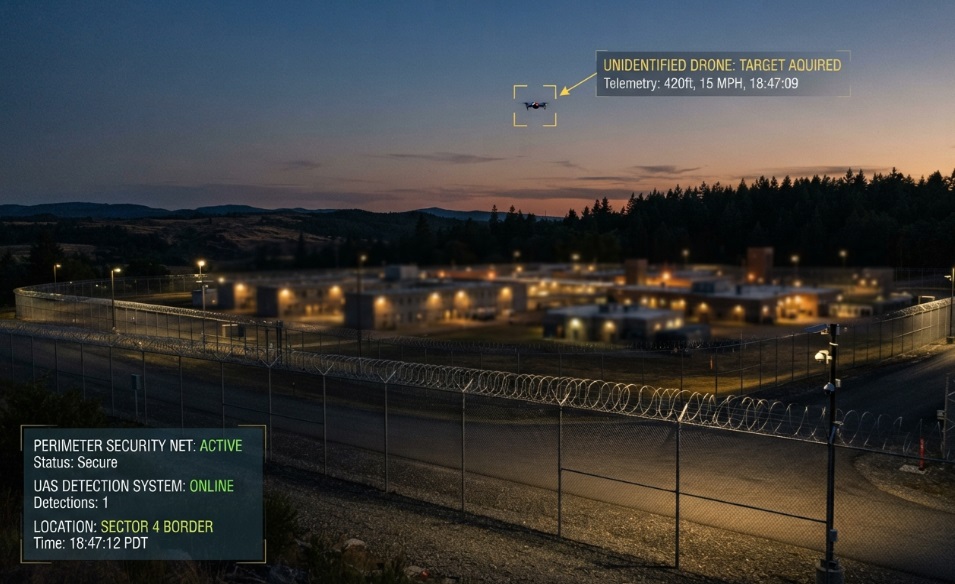
Drones are cheap, capable, and everywhere. A device that can carry a camera over a stadium, loiter above a substation, or drift across an airport’s approach path now costs less than a laptop and that math is exactly why security teams are being asked to justify spending five or six figures on a drone detection system. The honest answer to whether it’s worth it isn’t “yes, always” or “no, it’s overkill.” It depends on what you’re protecting, what a single incident would cost you, and whether the system you buy actually performs when it matters.
This guide breaks down what these systems do, what they cost, and the specific factors that determine whether a drone detection system pays for itself or becomes an expensive piece of hardware nobody checks.
The Real Cost of Flying Blind
Before pricing a solution, it helps to price the problem. A single unauthorized drone incursion at an airport can shut down runway operations for hours, cascading into delayed flights, diverted aircraft, and significant financial and reputational damage the kind of disruption that has made headlines at major airports in recent years. At a stadium or public event, an unidentified drone overhead can trigger an evacuation, a stopped game, or a security response that costs far more than a detection sensor ever would. At a power substation or refinery, a drone conducting surveillance ahead of a physical or cyber intrusion may never be noticed at all without dedicated detection, which is arguably the more expensive outcome.
The point isn’t to catastrophize. It’s that “worth the investment” is a comparison, not a standalone judgment. A system is worth it when the cost of the blind spot it closes is higher than the cost of closing it.
What a Drone Detection System Actually Does
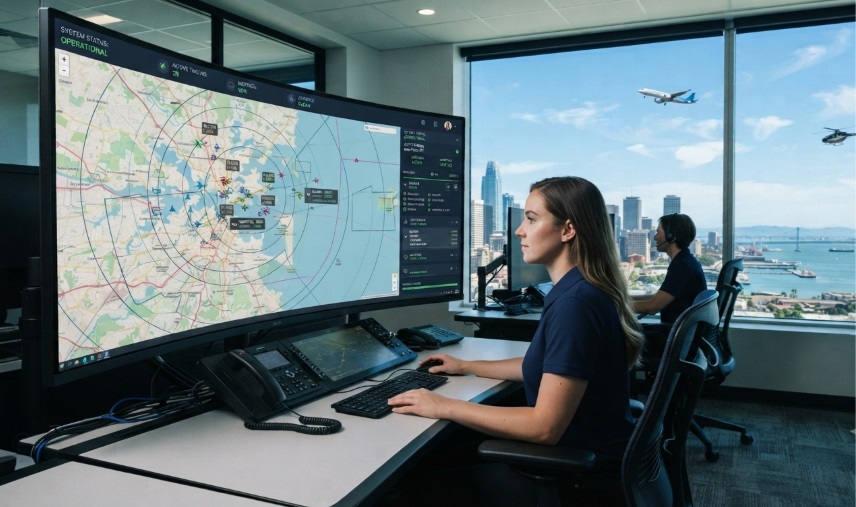
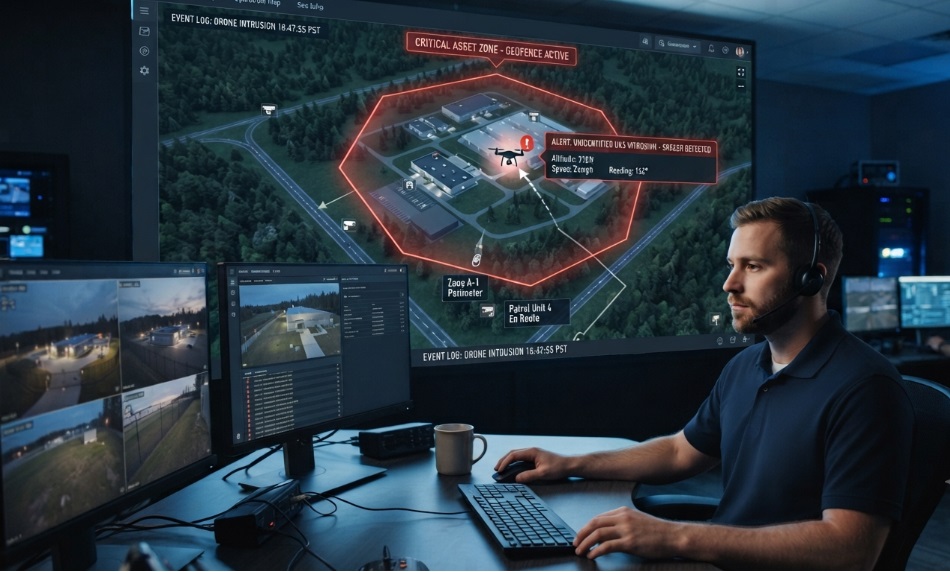
A drone detection system identifies unmanned aircraft operating in or near a defined airspace, then gives a security team the information needed to respond the drone’s location, altitude, flight path, and, in many cases, the location of its remote pilot. Most commercial-grade systems combine sensors with software: the hardware picks up a drone’s presence, and a cloud or on-premises platform turns that raw signal into an alert a human can act on, often with mapping, watchlists, and historical logging.
Detection vs. Mitigation: A Legal Line Most Buyers Miss
This distinction matters more than almost any spec on a data sheet. Detection means identifying and tracking a drone. Mitigation (or “counter-UAS”) means doing something about it jamming its signal, spoofing its GPS, or physically bringing it down. In the United States, jamming and most forms of active interference are tightly restricted under federal law and generally reserved for specific federal agencies, not private companies, airports, or most state and local entities. That means the overwhelming majority of organizations evaluating a “drone detection system” are and legally should be buying a detection and alerting platform, not a defense weapon. Understanding this up front changes what “worth it” means: you’re paying for awareness and evidence, not interception, and your response plan (notifying law enforcement, activating ground security, evacuating an area) is what turns that awareness into protection.
The Technology Inside a Modern Drone Detection System
Most drone detection systems rely on one or more of four sensor types, each with different strengths:
- RF (radio frequency) sensors : Passively listen for the radio signals a drone and its controller exchange, including Remote ID broadcasts now required on most drones operating in U.S. airspace. RF sensors are low-cost to deploy and can often identify the drone’s make, flight path, and pilot location, but they can miss drones that aren’t transmitting a detectable signal.
- Radar: Actively scans the airspace and can detect a drone regardless of whether it’s broadcasting anything, including custom-built or non-compliant aircraft. Radar is effective at range but historically struggles to distinguish small drones from birds without more advanced (micro-doppler) processing, and it typically costs more to deploy and maintain.
- EO/IR (optical and thermal cameras) : Provide visual confirmation and can help classify a target, and thermal imaging works in low light. Cameras are limited by line of sight and weather, and continuous-coverage systems usually need pan-tilt-zoom hardware to patrol an area.
- Acoustic sensors : Listen for the distinct sound signature of drone rotors. Acoustic detection is useful in dense urban settings where RF signals get noisy, but effective range is generally shorter than RF or radar.
No single sensor catches everything. RF can miss a silent drone; radar can flag a flock of birds; a camera can lose a target in fog. That’s why the strongest systems combine sensor types and let software cross-reference the data reducing false positives (the alerts that turn out to be nothing, which erode trust in the system) and false negatives (the real threats that get missed). When you’re judging whether a system is worth the investment, the sensor mix and how well it’s integrated is one of the biggest factors in whether the alerts your team receives are ones they can actually trust and act on.
How Much Does a Drone Detection System Cost?
Pricing varies widely based on coverage area, sensor type, and whether the system includes mitigation (which, as noted above, most commercial buyers won’t need or won’t legally be able to use). As a general guide:
| Tier |
Typical Range |
What You Get |
| Entry-level |
Roughly $10,000–$50,000 |
Basic detection for a smaller site, often single-sensor (commonly RF or a mobile/app-based solution), limited range |
| Mid-range |
Roughly $50,000–$200,000 |
Multi-sensor coverage for larger facilities, drone identification, extended range, often cloud-connected |
| Enterprise / high-end |
$200,000+ |
Full-site coverage, advanced sensor fusion, integration with existing security infrastructure the tier most military, government, and major airport deployments fall into |
These figures are directional, not quotes actual pricing depends heavily on site size, sensor count, and vendor. The more important number for most buyers isn’t the sticker price; it’s the total cost of ownership.
Hidden Costs That Change the Real Price
The purchase price is rarely the full story. Before comparing vendors, check for:
- Per-user or per-seat licensing fees : Some platforms charge extra for every additional team member who needs dashboard access, which adds up fast for organizations that want broad situational awareness rather than a single monitoring station.
- Subscription and support costs : Cloud-based platforms typically carry ongoing fees for data processing, alerting, and updates.
- Installation and maintenance: Fixed sensors may require site surveys, permitting, and periodic calibration.
- Scalability costs : What does it cost to add a second sensor next year, or extend coverage to a new building?
A system with a lower upfront price but expensive per-user licensing can end up costing more over three years than a system priced higher but built to scale without added fees.
7 Factors That Separate a Worthwhile System From an Expensive Mistake
- Detection accuracy in your specific environment. A system tuned for open airspace may perform differently in a dense urban or coastal setting. Ask for performance data relevant to your site type.
- False positive rate. A system that constantly flags birds, weather balloons, or aircraft as threats will get ignored and an ignored alert is functionally the same as no detection system at all.
- Coverage of both Remote ID and non-Remote ID drones. Remote ID compliance is now standard for most legally operated drones in the U.S., but it does nothing to catch a drone whose operator has disabled or spoofed that signal which is precisely the scenario you most need coverage for.
- Scalability without per-user penalties. Can you add sensors, users, and locations without renegotiating pricing every time?
- Deployment complexity. A system that requires a specialized technical team to install and maintain adds ongoing labor cost that should factor into your ROI calculation.
- Integration with existing security operations. A detection platform that plugs into the security workflows and tools you already use is worth more than one that creates a separate, siloed dashboard nobody checks.
- Regulatory and legal clarity. Make sure you understand exactly what the system can legally do in your jurisdiction detection is broadly permitted; mitigation is not, for most private organizations.
How to Think About ROI Before You Sign a Contract
Return on investment for a drone detection system isn’t measured in revenue generated it’s measured in risk avoided and response time gained. A useful way to frame it:
- What would a single serious incident cost you? Consider operational downtime, incident response, potential liability, regulatory exposure, and reputational damage.
- How likely is an incident, realistically, given your site and location? Airports, stadiums, correctional facilities, and critical infrastructure sites face materially higher exposure than a low-profile commercial building.
- What does the system cost over three years, all-in hardware, subscriptions, per-user fees, and maintenance not just the initial quote?
- How much faster is your response with detection versus without it? A system that gives your team minutes of advance warning instead of zero warning changes what “response” even means.
If the all-in cost is meaningfully lower than the realistic cost of even one avoided incident, the investment case is straightforward. If a vendor can’t help you build that comparison, that’s itself useful information about how they think about value.
Industries Where the Payback Is Fastest
Not every organization needs the same level of investment, but a few sectors see the clearest, fastest justification:
- Airports, where even brief drone-related disruptions carry outsized operational and financial cost.
- Critical infrastructure (power, water, telecom), where a drone conducting surveillance ahead of an attack may otherwise go unnoticed entirely.
- Public events and stadiums, where crowd safety and evacuation risk raise the stakes of any airborne unknown.
- Correctional facilities, where drones are a known vector for contraband delivery.
- Military, government, and law enforcement sites, where the threat model already assumes adversarial surveillance.
Organizations in lower-risk categories can still benefit, often starting with a lighter-weight or mobile solution before scaling to fixed, site-wide coverage.
Questions to Ask Before You Buy
- Does the system detect drones that aren’t broadcasting Remote ID?
- What is the documented false positive rate, and under what conditions was it tested?
- Are there per-user fees, and how does pricing change as we add sensors or seats?
- What happens after detection does the platform support alerting, watchlists, and historical logging, or just a live map?
- What can this system legally do in mitigation, if anything, and does that match our regulatory environment?
- How is the system deployed, and what ongoing maintenance does it require?
The Bottom Line
A drone detection system is worth the investment when it closes a real gap between what you can currently see in your airspace and what you need to see to keep people, assets, and operations safe and when the total cost of running it is smaller than the cost of the incident it prevents. The technology has matured to the point where accurate, scalable detection no longer requires a defense-budget price tag. The differentiator now isn’t whether a system can detect a drone in ideal conditions; it’s whether it detects real threats reliably, scales without punishing pricing, and gives your team information they can actually act on.
FAQ
1) How much does a drone detection system cost?
Pricing typically ranges from around $10,000 for basic entry-level detection to $200,000+ for enterprise-grade, multi-sensor coverage. The final cost depends on site size, sensor types, and whether pricing includes per-user or subscription fees, which can significantly change the total cost of ownership.
2) Is it legal for a private company to detect drones?
Yes. Detecting and tracking drones is broadly legal for private organizations in the U.S. What’s restricted is mitigation, jamming, spoofing, or physically disabling a drone which is generally limited to specific federal agencies. Most commercial drone detection systems are detection-and-alerting platforms, not interception systems.
3) What’s the difference between drone detection and counter-drone (C-UAS) systems? Detection systems identify and track drones. Counter-drone or C-UAS systems add mitigation capabilities on top of detection. For most private-sector buyers, a detection-only system is both the legal option and the appropriate one.
4) Can a drone detection system catch drones that aren’t using Remote ID?
Some can. RF-based systems that rely solely on Remote ID broadcasts may miss drones with that signal disabled or spoofed. Systems using radar, multi-sensor fusion, or RF sensors capable of detecting non-compliant signal anomalies offer broader coverage against drones that aren’t playing by the rules.
What sensor type is best for drone detection?
There isn’t a single “best” sensor each has trade-offs. RF is cost-effective and identifies pilot location but can miss silent drones; radar detects regardless of signal but is pricier and needs advanced processing to tell drones from birds; cameras confirm visually but are limited by weather and line of sight; acoustic sensors work well in dense areas but have shorter range. The strongest systems combine multiple sensors.
5) How do I calculate ROI on a drone detection system?
Compare the realistic cost of a serious incident at your site (downtime, liability, reputational damage) against the all-in cost of the system over several years, including subscriptions and per-user fees. If the system’s cost is meaningfully lower than the cost of even one avoided incident, the investment is generally justified.
6) Do drone detection systems require a technical team to operate?
It depends on the vendor. Some systems are designed for plug-and-play deployment with mobile-app or cloud-based monitoring that doesn’t require dedicated IT staff, while others, particularly radar-based or highly customized installations, may need specialized setup and maintenance.
7) Which industries benefit most from drone detection systems? Airports, critical infrastructure operators, public event venues, correctional facilities, and military/government sites typically see the fastest and clearest return, given the higher cost and likelihood of drone-related incidents in those environments.

 BLOG · SEP 22, 2026