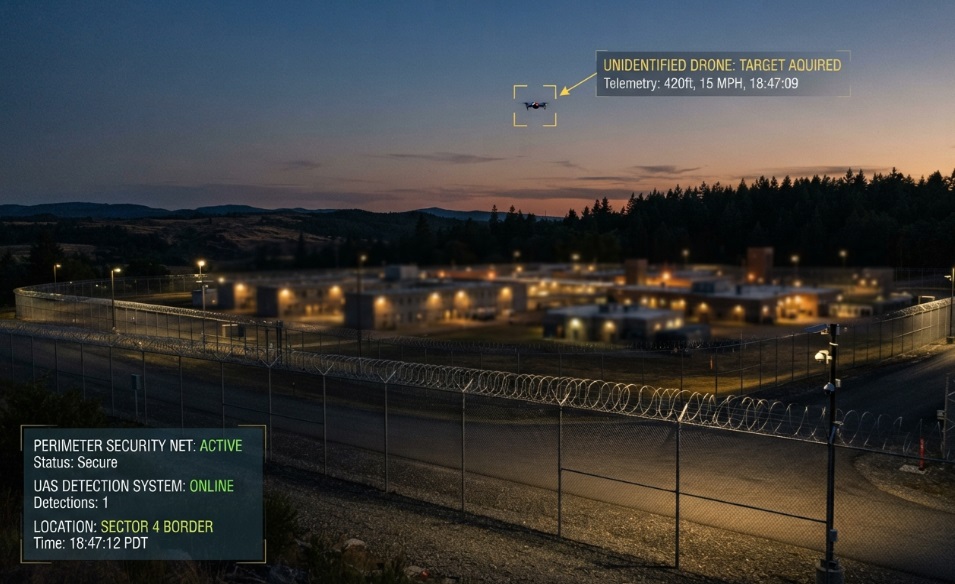
On September 11, 2026, drones launched from Iraqi territory struck Saudi Arabia’s East-West pipeline, a 1,200-kilometer artery that moves millions of barrels of crude a day, forcing an emergency shutdown. It wasn’t an isolated case. In 2019, ten drones and cruise missiles hit Saudi Aramco’s Abqaiq and Khurais facilities and cut the kingdom’s oil output in half for weeks. Drones have also been spotted circling Norwegian rigs and near the Nord Stream pipeline corridor in the years since. For oil and gas operators, the pattern is hard to ignore: a fence line and a security patrol are no longer enough to protect a wellsite, a refinery, or hundreds of miles of exposed pipeline.
Drone detection for oil and gas facilities is the first line of defense that lets a company see a threat before it becomes an incident, rather than finding out about it from a leak, a fire, or a headline. This article walks through how drone detection for oil and gas assets actually works, what a detection system can and cannot legally do once it spots a drone, where it needs to be deployed, and what to evaluate before choosing a system.
Why Drone Sabotage Has Become a Real Risk for Oil and Gas Operators
Oil and gas infrastructure was built to withstand ground-level threats: fences, cameras, patrols, checkpoints. None of that stops something arriving from three hundred feet in the air. A commercial-grade drone can now fly for thirty minutes or more, carry a payload of several pounds, and be bought for a few hundred dollars no state backing or specialized training required.
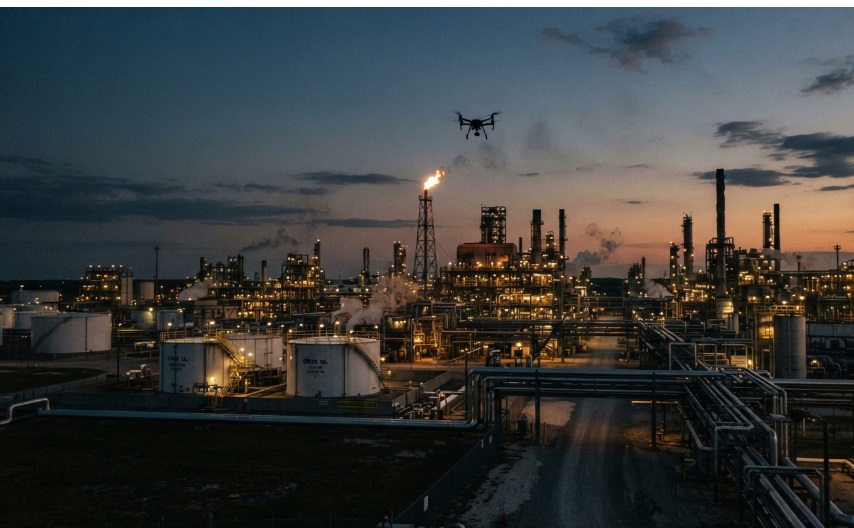
That gap has already been exploited well beyond the headline attacks on Saudi facilities. Security researchers and industry reports have documented rising drone incursions near onshore wellsites, offshore platforms, and pipeline corridors, ranging from unauthorized surveillance flights that quietly map a facility’s layout ahead of a physical attack, to drones rigged with objects intended to be dropped onto tanks, flare stacks, or control buildings. Because oil and gas sites often sit in remote, sparsely monitored terrain, an intruding drone can frequently complete its flight and leave before anyone on the ground even notices.
This is exactly why drone detection for oil and gas operations has moved from a nice-to-have to a standard line item in critical infrastructure security budgets. Insurers, regulators, and corporate security leadership increasingly expect it, not as a luxury, but as basic situational awareness for airspace the company has no other way to monitor.
What “Drone Detection” Actually Means in an Oil and Gas Context
It’s worth clearing up a common mix-up. Most published content about “drones and oil and gas” is actually about drones used as inspection tools: flying pipeline surveys, thermal leak checks, or tank and flare-stack inspections. That is a genuinely useful application, but it is a completely different discipline from drone detection for oil and gas security, which is about identifying unauthorized aircraft flying near your assets, not deploying your own drones to inspect them.
A drone detection system doesn’t fly anything. It’s a sensor network, fixed or mobile, that continuously scans the airspace around a facility and flags any drone entering it, whether or not the operator wants to be found. AirSentinel’s own drone detection for oil, gas, and mining solutions, for example, are built around this distinction, classifying what they see so security teams can separate authorized company or contractor drones from unidentified aircraft that warrant a closer look. For a broader look at how this applies across other critical facilities, see how the same detection principles apply to protecting critical infrastructure from drone threats.
How Drone Detection Systems Work on Oil and Gas Sites
Detection systems rely on a mix of sensor technologies, each with strengths and blind spots. A well-designed deployment layers several of them together rather than depending on any single method.
Radio Frequency (RF) Detection
Most consumer and commercial drones broadcast RF signals to communicate with their controller, and increasingly to comply with the FAA’s Remote ID rule. RF sensors passively listen for these transmissions and can often identify the drone model, its GPS coordinates, and even the location of the pilot, all without emitting any signal themselves.
Radar
Radar detects a drone’s physical presence by bouncing signals off it, which makes it effective against aircraft that aren’t broadcasting Remote ID or any RF signal at all a growing category sometimes called “dark” drones. Radar is especially useful across the large, open terrain typical of oil fields and pipeline corridors.
Electro-Optical and Infrared (EO/IR) Cameras
Once radar or RF cues a target, EO/IR cameras provide visual confirmation, letting a security team see what the object actually is and whether it appears to be carrying a payload critical for telling a genuine threat apart from a bird or wind-blown debris.
Acoustic Sensors
Acoustic sensors pick up the distinct rotor sound of small drones, adding a low-cost supplementary layer, though wind and industrial noise on active oil and gas sites can limit how far acoustic detection reaches.
Why Multi-Sensor Fusion Matters
No single sensor works in every condition. RF misses dark drones. Radar can be confused by birds, vehicles, or vegetation. Cameras need something else to cue them first. That’s why layered, multi-sensor drone detection for oil and gas facilities combining RF, radar, and optical inputs, then correlating them through software consistently produces better accuracy and fewer false alarms than any single technology used alone. This is also the main advantage that modern, software-driven systems have over older, single-protocol approaches; the trade-offs are covered in more depth in this comparison of AI-based drone detection versus legacy systems.
Detection vs. Mitigation: What Oil and Gas Companies Are Legally Allowed to Do
Detecting a drone and doing something about it are two separate problems, and U.S. law treats them very differently. Federal law generally reserves active mitigation jamming a drone’s signal, spoofing its GPS, or physically bringing it down for a small number of federal agencies operating under specific statutory authority. Private companies, including oil and gas operators, are not permitted to jam or disable a drone themselves, no matter how credible the threat looks on a radar screen.
What oil and gas companies can do, and should do, is detect, track, classify, and respond through established protocols: alerting site security, notifying local law enforcement or the FAA, moving personnel out of a payload’s likely flight path, and preserving flight data as evidence. Congress and the FAA have both been working through proposals to change this, including a Section 2209 rulemaking on restricting drone flights near critical infrastructure and legislation aimed at extending mitigation authority to infrastructure owners, but until those measures pass, detection paired with a rehearsed response plan remains the legal backbone of drone security for oil and gas sites.
This is exactly why the practical value of drone detection for oil and gas companies lies less in stopping a drone outright and more in buying time: time to move people out of harm’s way, time to alert the right authorities, and time to gather evidence that supports investigation and prosecution.
Key Sabotage Scenarios Drone Detection Helps Prevent
These are the scenarios that drone detection for oil and gas security programs are specifically built to catch:
| Scenario |
What It Looks Like |
How Detection Helps |
| Pre-attack reconnaissance |
A drone makes repeated passes over a wellsite or refinery, mapping fence lines, camera blind spots, and access points. |
Flags repeat unauthorized flights and builds a pattern history security teams can act on before an attack is planned. |
| Payload drops / physical sabotage |
A drone carries an incendiary or explosive device toward a tank, flare stack, or control building. |
Provides advance warning and flight-path data, enabling evacuation and a coordinated response. |
| Pipeline right-of-way interference |
Drones fly along exposed above-ground pipeline sections to scout vulnerable segments. |
Extends coverage along linear assets that fixed guards and cameras cannot fully monitor. |
| Smuggling or insider coordination |
A drone delivers contraband or signals someone inside a secured perimeter. |
Detects unauthorized flights inside restricted zones regardless of the operator’s intent. |
| Operational disruption |
An unauthorized drone near a flare stack or helipad forces a temporary shutdown. |
Confirms whether an object in the airspace is a genuine drone versus a false alarm, reducing unnecessary downtime. |
Where Drone Detection for Oil and Gas Operations Needs to Be Deployed
Coverage needs vary considerably by asset type, and a plan built for one site type rarely transfers cleanly to another.
- Onshore wellsites and drilling pads: Often remote and unstaffed overnight, these sites need detection that can run autonomously and alert a central monitoring team rather than relying on someone watching a screen on-site.
- Offshore platforms: Salt air, high wind, and constant vibration demand ruggedized, marine-rated hardware, along with detection that keeps working when a helicopter or supply vessel is also nearby.
- Refineries and processing plants: Dense equipment layouts and flammable atmospheres mean detection alerts need to feed directly into existing SCADA and security operations rather than sitting on a separate, disconnected system.
- Pipeline corridors and pumping or compressor stations: Hundreds of miles of low-traffic, exposed terrain make this historically the hardest asset type to protect, and the one where mobile or distributed sensors matter most.
- Storage terminals and tank farms: High-consequence targets where even a small, successful payload drop can trigger a fire or a significant environmental release.
What to Look for When Choosing a Drone Detection System for Oil and Gas
Not every counter-drone product built for an airport or a stadium translates well to an oil field. When evaluating a drone detection for oil and gas deployment, the following criteria tend to separate systems that hold up in the field from ones that don’t:
- Detects both Remote ID and non-compliant drones: A system that only reads Remote ID broadcasts will miss custom-built or deliberately non-compliant aircraft, which are exactly the ones most likely to be used for sabotage.
- Ruggedized for onshore and offshore extremes: Corrosion resistance, wide temperature tolerance, and high wind ratings matter as much as detection range.
- A low false-alarm rate tuned to the environment: Birds, wind-blown debris, and industrial vibration all need to be filtered out, or security teams will start ignoring alerts altogether.
- Integration with existing SCADA, cameras, and SOC dashboards: Detection data is only useful if it reaches the people and systems already responsible for site security, rather than living in a separate app no one checks.
- Scalability without per-user licensing: Sites and personnel change; a pricing model that penalizes adding sensors or users discourages the kind of full-site coverage that actually deters sabotage.
- A vendor that understands the regulatory limits: Be cautious of any vendor implying they can legally jam or bring down a drone for a private company as covered above, that authority is reserved for a small number of federal agencies.
AirSentinel’s AMS sensor and companion mobile app are built around these constraints specifically for high-risk industrial sites, and the vendor-selection questions above are covered in more detail in this guide to choosing a drone detection system that won’t fail within its first two years.
Building a Layered Security Plan Around Drone Detection
Technology alone doesn’t prevent sabotage; it has to sit inside a plan. A layered security plan built around drone detection for oil and gas sites typically includes the following steps:
- Assess exposure. Map site layout, review any past incidents, and account for proximity to borders, conflict-adjacent regions, or populated areas.
- Deploy layered sensors. Combine RF, radar, and optical detection based on terrain, budget, and the specific asset type being protected.
- Define a response protocol. Document exactly who gets notified, what triggers an evacuation, and which law enforcement or FAA contacts are called first.
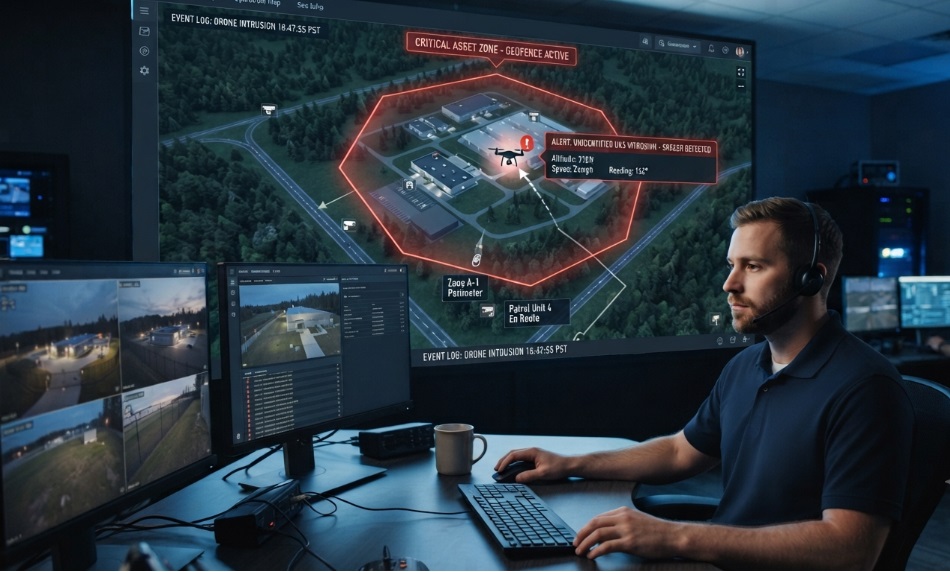
- Integrate with existing security operations. Feed drone alerts into the same dashboard used for physical security and access control, such as a cloud platform with live and historical airspace analysis, rather than running it as a disconnected system.
- Train personnel. Security staff need to know how to interpret and act on an alert, not just receive it.
- Review and tune regularly. False-alarm patterns shift with the seasons, local wildlife, and new construction, so detection thresholds need periodic adjustment.
Investing in drone detection for oil and gas operations today is far cheaper than recovering from a shutdown, a spill, or a fire caused by an aerial attack no one saw coming. The technology won’t stop a drone by itself, but it gives security teams the one thing they can’t get any other way: advance warning.
FAQs
1) Is drone detection legally required for oil and gas facilities?
Not universally. There’s no single federal mandate requiring oil and gas operators to install drone detection, though it is increasingly expected by insurers, corporate risk policies, and, for certain high-consequence sites, by state or facility-specific security regulations. The FAA has also proposed rules under Section 2209 that would let critical infrastructure operators formally request drone flight restrictions over their sites.
2) Can oil and gas companies jam or shoot down a drone themselves?
Generally, no. Federal law reserves active mitigation, such as jamming, spoofing, or physically disabling a drone, for a small number of federal agencies operating under specific statutory authority. Private companies can legally detect, track, and classify drones, and should respond through security and law enforcement protocols rather than attempting to disable the aircraft themselves.
3) How is drone detection different from drones used for pipeline inspection?
Drone detection identifies unauthorized aircraft flying near your facility; it doesn’t involve flying anything. Pipeline inspection drones are the opposite: a company’s own drones, equipped with cameras or thermal sensors, that fly planned routes to check for leaks, corrosion, or damage. The two are often confused because they share the word “drone,” but they solve completely different problems.
4) What is the typical detection range for a system used on an oil and gas site?
Range depends heavily on the sensor mix, terrain, and the target drone’s size and signal output, so it varies by deployment rather than following one fixed number. RF and radar sensors generally cover a wider area than optical or acoustic sensors alone, which is why most oil and gas deployments layer several sensor types rather than relying on a single technology’s maximum range.
5) Does drone detection work on offshore platforms?
Yes, but it requires hardware rated for marine conditions, including salt exposure, high wind, and constant vibration. Offshore deployments also need to account for legitimate air traffic, such as crew-change helicopters and supply drones, so the classification layer that distinguishes authorized from unauthorized aircraft matters even more than it does onshore.
6) How much do false alarms cost oil and gas operators?
Beyond the direct cost of an unnecessary shutdown or evacuation, frequent false alarms erode trust in the system, and security teams eventually start second-guessing or ignoring alerts altogether. This is why a low false-alarm rate, tuned to the specific site’s wildlife, weather, and industrial noise, is one of the most important criteria when selecting a system.
7) Can a drone detection system integrate with our existing security infrastructure?
Most modern systems are designed to feed alerts into existing cameras, alarm systems, video management software, or a security operations center dashboard rather than requiring a standalone platform. Confirming this integration capability before purchase avoids creating a second, disconnected security system that no one consistently monitors.

 BLOG · SEP 22, 2026