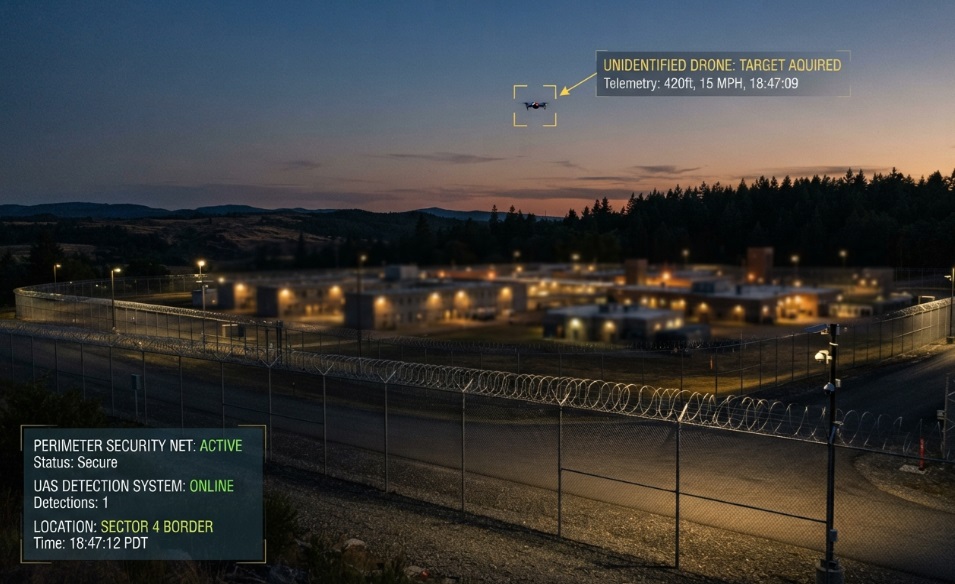
Introduction: Protecting High-Value Energy Assets from Above
Oil, gas, and mining facilities form the structural backbone of global energy supply chains, operating across vast geographic footprints, remote extraction fields, and heavily guarded processing refineries. While traditional physical security frameworks such as perimeter fencing, reinforced gates, and closed-circuit television (CCTV) effectively control ground-level access, they leave facilities entirely blind to aerial intrusions.
The rapid proliferation of Unmanned Aerial Systems (UAS) has transformed low-altitude airspace security into an urgent operational priority for energy sector leaders.
To maintain continuous productivity, safeguard proprietary processing infrastructure, and comply with rigorous safety mandates, modern energy operators require proactive tools to monitor skies safely and affordably.
Implementing specialized solutions for drone detection for oil and gas operations allows facility managers to gain comprehensive 360-degree airspace visibility.
By utilizing platforms like https://airsentinel.ai/, energy companies turn raw real-time telemetry into immediate operational control.
1. The Shifting Landscape of Industrial Airspace Vulnerabilities
The energy sector faces unique operational risks that make airspace monitoring essential. Refineries, petrochemical plants, and pipeline compressor stations house sensitive infrastructure vulnerable to unauthorized observation, industrial espionage, and potential sabotage. In the past, securing low-altitude airspace meant relying on expensive, military-grade radar networks that required specialized technical squads and heavy capital outlays.
However, modern industrial sites operate on tighter schedules and leaner budgets, demanding streamlined, scalable, and intuitive technology. Energy operators must track both Remote ID-compliant drones and custom-built or legacy UAVs that operate outside standard regulatory frameworks.
Without dedicated tracking mechanisms, facilities expose themselves to severe blind spots. Deploying specialized drone detection for oil and gas fields bridges this gap, allowing security teams to identify incoming craft instantly without disrupting ongoing industrial workflows.
| Airspace Risk Factor |
Traditional Ground Security |
Enterprise Drone Detection Solution |
| Detection Angle |
Ground-level visibility only (0–15 degrees) |
Full 360-degree overhead sky visibility |
| Response Time |
Delayed reaction after visual confirmation |
Real-time alerts upon electronic signature capture |
| Identification |
Unable to identify pilot or device ID |
Captures Remote ID, frequency, and flight path |
| Scalability |
Expensive physical guard deployment |
Cloud-native sensors with unlimited user access |
Securing complex industrial sites requires robust hardware and software components engineered for precision, reliability, and seamless integration. Effective drone detection for oil and gas relies on a unified technological stack:
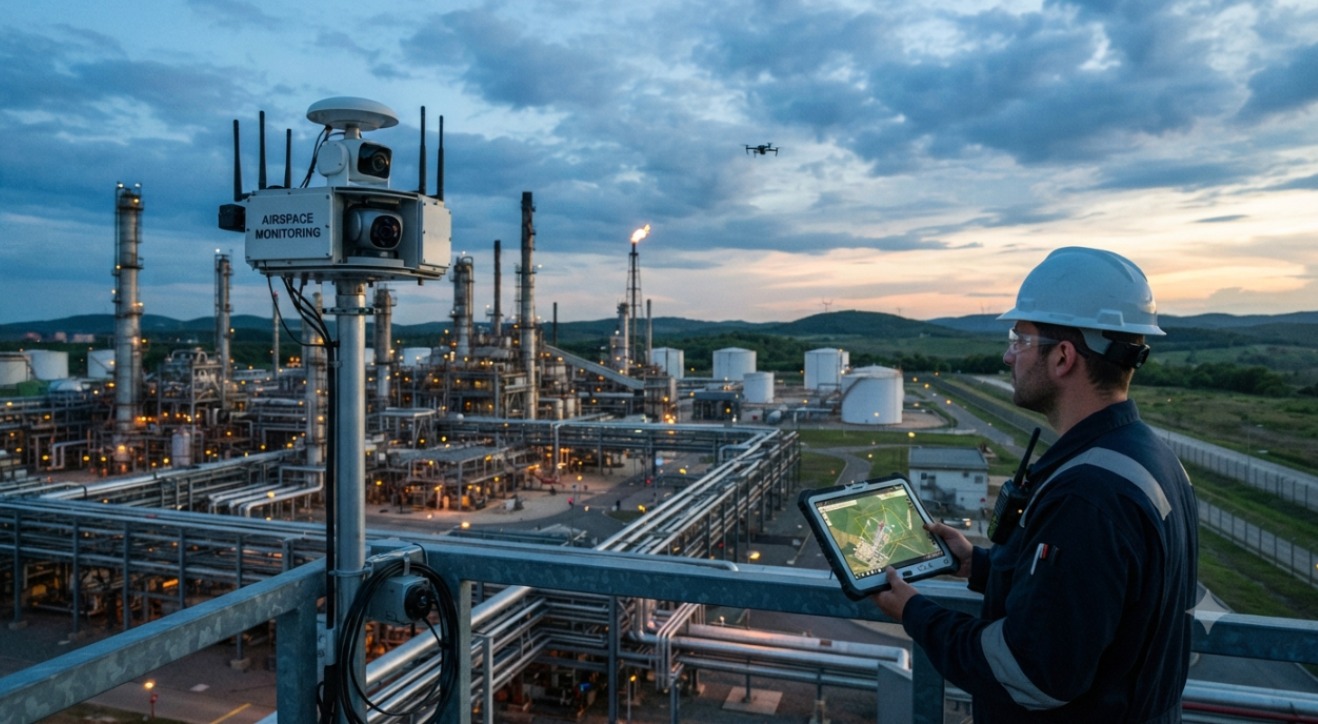
- Hardware Sensors: Fixed and mobile sensor configurations—such as the https://airsentinel.ai/ AMS Sensor—provide flexible deployment options across rugged oil fields and sprawling refineries. This includes specialized units like the AMS V8 for real-time Remote ID tracking and the AMS V8 Pro software-defined radio (SDR) system for pinpointing non-remote ID UAVs.
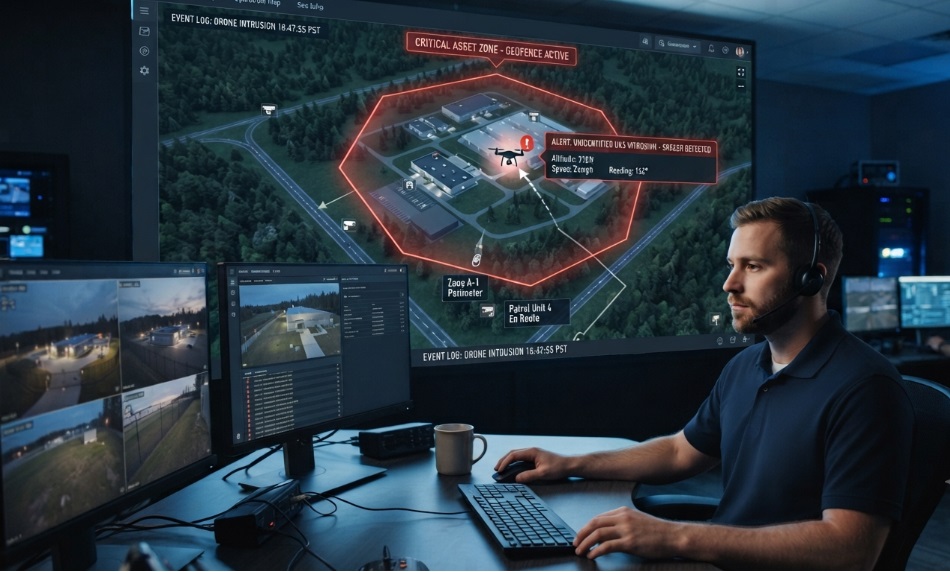
• Cloud Platforms with Live & Historical Analysis: Centralized cloud dashboards give security directors instant visibility into live drone telemetry, automated alerts, and historical flight logs, assisting safety managers in analyzing recurring intrusion trends.
• Custom Watchlists and Geofences: Operators can define precise geographical boundaries around critical processing units, storage farms, and flare stacks. Crossing these geofences triggers immediate notifications.
• Mobile Applications: For roving security patrols and field engineers, tools like the https://airsentinel.ai/ Mobile App turn standard Android devices into immediate tracking interfaces, detecting Remote ID drones within a 1,000 to 5,000-foot radius without requiring complex user accounts.
3. Operationalizing Airspace Security in Refineries and Extraction Fields
Integrating airspace surveillance into an active oil and gas facility does not require complex IT overhauls or specialized aerospace engineers. Industrial managers focus on three core implementation pillars:
Plug-and-Play Simplicity and Rapid Deployment
Traditional security installations often stall due to complicated wiring and heavy maintenance overhead. Oil and gas sites operate under strict safety guidelines and fast-paced production schedules. Enterprise monitoring units are built for straightforward plug-and-play setup. Once deployed, cloud platforms run continuously in the background, offering automated updates without requiring dedicated on-site server management.
Cost-Effective Scalability Without Per-User Fees
As industrial complexes expand their operational footprints, security infrastructure must scale alongside them. Modern architectures allow safety teams to expand coverage effortlessly by simply adding more hardware sensors to the network. Eliminating per-user licensing fees ensures that large multi-facility organizations can grant access to unlimited security personnel, plant managers, and partner agencies without inflating overhead expenses.
A vital distinction in modern airspace management is the difference between active electronic interference and passive intelligence gathering. Enterprise solutions designed for drone detection for oil and gas focus on informing and empowering security teams rather than actively jamming signals or seizing control of aircraft—actions that carry severe regulatory and legal liabilities in civilian airspace. When a drone is detected, operators receive precise identification data, coordinates, and trajectories, enabling them to follow internal plant protocols or notify local authorities immediately.
Conclusion: Securing the Future of Energy Infrastructure
As commercial and industrial drone utilization accelerates worldwide, safeguarding the airspace above oil, gas, and mining facilities is an essential pillar of comprehensive asset protection. By integrating scalable hardware sensors, real-time cloud analytics, and mobile monitoring tools, energy operators eliminate blind spots and secure perimeters effectively.
Systems designed around simplicity, affordability, and reliability give industrial leaders the confidence needed to maintain continuous operations. To explore how your facility can establish complete 360-degree airspace visibility, visit https://airsentinel.ai/ to review platform capabilities or request a customized demonstration.
Frequently Asked Questions (FAQs)
Q1: What is drone detection for oil and gas, and why is it necessary?
A: Drone detection for oil and gas refers to specialized hardware and software systems used to monitor low-altitude airspace around refineries, extraction sites, and pipelines. It is necessary because traditional ground-level security measures cannot spot unauthorized aerial surveillance, industrial espionage, or collision hazards approaching from above.
Q2: How does AirSentinel detect unauthorized drones near industrial plants?
A: AirSentinel utilizes advanced hardware sensors like the AMS V8 series to capture real-time Remote ID signals, alongside multi-band software-defined radio (SDR) technology in the AMS Pro model to identify non-compliant or custom-built UAVs through signal anomalies and device fingerprints.
Q3: Do oil and gas facilities need a dedicated technical team to run AirSentinel?
A: No. The platform is engineered for organizations without dedicated IT or specialized security tech teams. Hardware installation is straightforward, and the cloud-native system operates continuously in the background with intuitive mobile and desktop dashboards.
Q4: Can multiple security team members access the AirSentinel platform simultaneously?
A: Yes. AirSentinel features a scalable, cloud-based architecture with unlimited user access and zero per-user licensing fees, allowing plant operators, security supervisors, and external response partners to view live alerts seamlessly.
Q5: Does AirSentinel take active control or jam detected drones?
A: No. AirSentinel is designed to inform and empower security personnel rather than interfere with aircraft. When a drone enters a monitored zone, the platform delivers precise telemetry data, location, and flight path so your team can execute internal safety protocols or contact authorities appropriately.

 BLOG · SEP 22, 2026