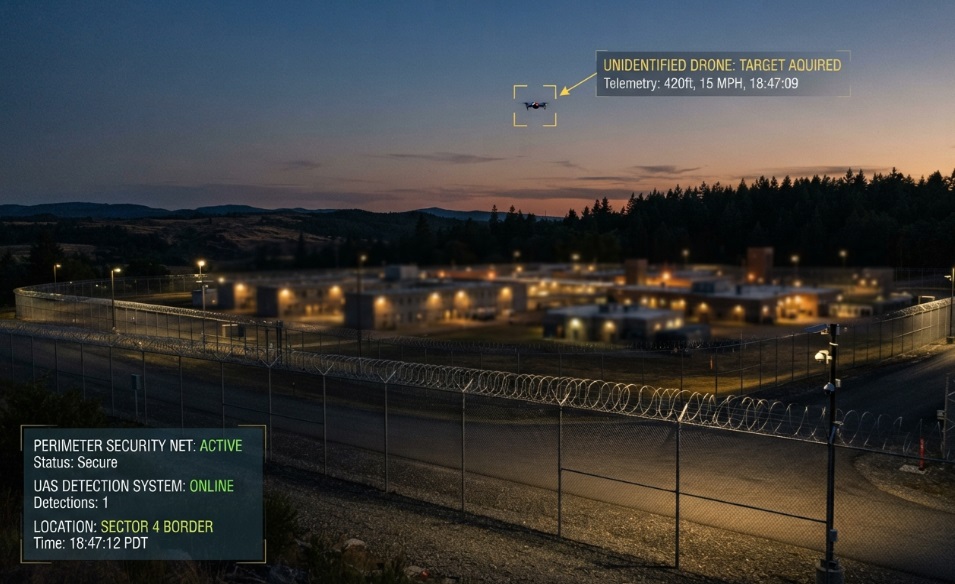
Open campuses, packed stadiums, sensitive research spaces, and major public gatherings all create an airspace-security challenge that traditional perimeter controls cannot address. Drone detection for universities gives campus security teams timely visibility into aircraft activity around the places they are responsible for protecting.
The objective is not to turn a campus into a restricted zone. It is to help authorized personnel distinguish expected activity from unknown activity, assess context quickly, and follow an established response plan when a flight requires attention.
Why Universities Need Drone Detection
The Modern Campus Airspace Challenge
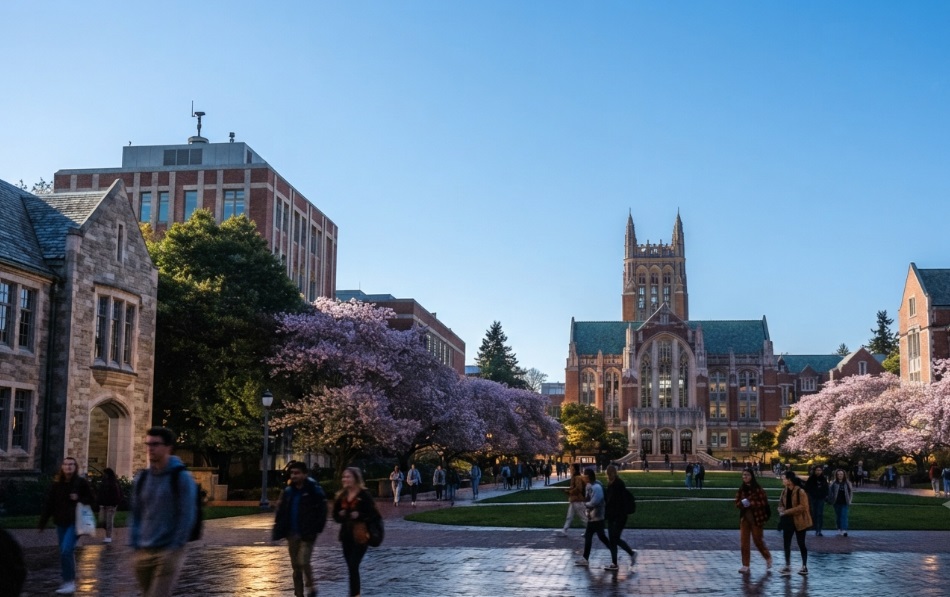
Universities are open, active environments. Student housing, athletic venues, research facilities, parking areas, visitor routes, and outdoor gathering spaces can sit within a single security footprint. A drone can enter that footprint without using an entrance, interacting with staff, or triggering conventional access-control measures.
For this reason, drone detection for universities is best understood as airspace awareness. It helps teams know what is in the air, where it is operating, whether it is likely authorized, and which operational protocol should apply.
Common Drone Incidents on Campuses
- Unauthorized filming around student areas, sporting venues, or ticketed events
- Aircraft hovering over crowds, athletic fields, press areas, or restricted rooftops
- Drone activity associated with protests, stunts, banners, or event disruption
- Potential reconnaissance of sensitive facilities or event logistics
- Contraband delivery attempts into controlled-access areas
- Unauthorized aircraft operating near helicopters, medical operations, or temporary aviation activity
Not every sighting is malicious. But without reliable information, personnel are forced to guess. Drone detection for universities replaces that uncertainty with a clearer operating picture.
How Drone Detection Systems Work
Drone detection platforms can use several sensor types. Each has useful strengths and important limitations, particularly in dense campus or stadium environments.
Four Core Sensor Technologies
| Sensor type |
What it contributes |
Planning consideration |
| RF detection |
Identifies radio-frequency signals associated with drones and controllers; may provide useful identification or location information. |
An RF-only approach may have limits when a drone is autonomous, non-transmitting, or operating in a noisy RF environment. |
| Radar |
Detects a physical object in the airspace, including some non-cooperative aircraft. |
Small aircraft, birds, weather, and structural clutter require careful configuration and verification. |
| EO/IR cameras |
Provides visual confirmation and supports assessment of aircraft behavior, form factor, or visible payload indicators. |
Line of sight, weather, lighting, and obstructions affect performance. |
| Acoustic sensors |
Uses rotor sound signatures at close range. |
Crowds, traffic, music, and other ambient noise can reduce usefulness at event venues. |
Why Sensor Fusion Matters
A campus should not choose a system based only on a headline range claim. The useful question is how the system performs across the conditions that matter on-site: tall structures, scoreboards, tree cover, RF congestion, traffic, weather, and event-day crowds.
Drone detection for universities is more dependable when the platform can correlate more than one source of information. RF can help identify a transmitting aircraft or controller; radar can contribute awareness of physical objects; cameras can support verification. Combining inputs reduces dependence on any one detection path.
Remote ID and Non-Remote ID Drones
Remote ID is intended to broadcast identifying and location information from participating drones. It can provide useful awareness, but it should not be treated as the only layer of a campus program. Legacy, custom-built, improperly configured, or otherwise non-cooperative aircraft may not offer the same information.
When evaluating drone detection for universities, ask vendors specifically how the deployment handles Remote ID, what other detection methods are available, and which results are confirmed versus inferred.
Detection and Response: Understanding Legal Limits
What Detection Can and Cannot Do
Detection tells a security team that activity is occurring. It does not automatically create authority to interfere with an aircraft. This distinction should be explicit in every campus drone response plan.
In the United States, actions such as jamming, taking control of, damaging, or bringing down a drone are subject to federal restrictions. University and venue personnel should coordinate with legal counsel, campus police leadership, and appropriate law-enforcement partners instead of assuming a detection system includes a lawful mitigation capability.
Coordinating With Law Enforcement
A useful alert is one that leads to a defined action. For drone detection for universities, that usually means a practical escalation workflow: validate the alert, assess location and behavior, notify the right incident commander, preserve relevant information, and engage law enforcement or aviation partners when appropriate.
For large events, the plan should also identify who manages public communications, who controls security-camera views, and how the team documents the incident after the event.
AirSentinel Solutions for Universities
AirSentinel provides real-time drone detection and airspace monitoring capabilities designed to help organizations review activity, configure alerts, and support informed security decisions. Its university-focused offering supports monitoring across campus environments and event locations.
AMS for Fixed and Mobile Monitoring
AirSentinel AMS supports fixed and mobile deployments for organizations that require flexible coverage planning. A fixed installation may suit regularly monitored areas such as a stadium, research zone, or central campus. A mobile configuration can supplement coverage for commencement, concerts, high-profile visitors, or temporary events.
Cloud-Based Airspace Visibility
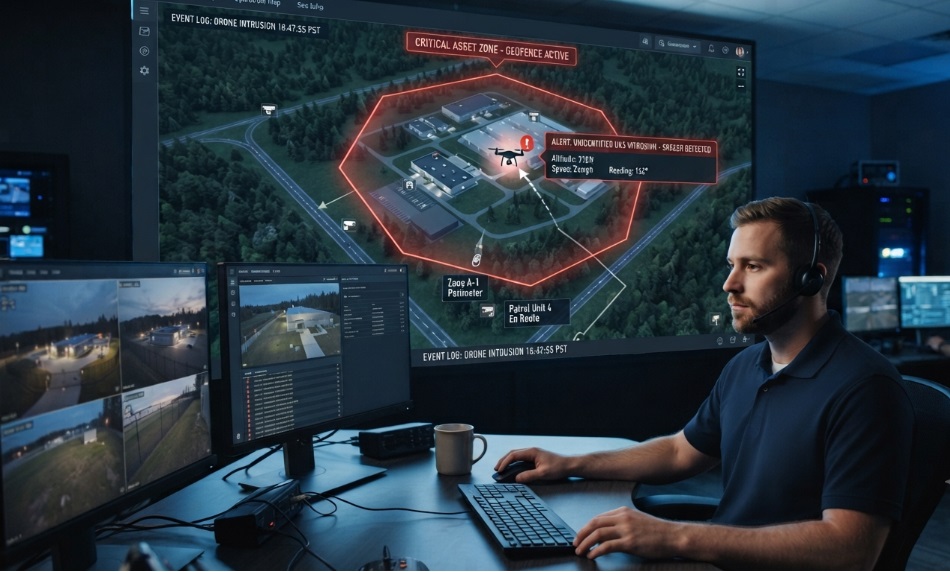
A centralized platform helps authorized stakeholders view alerts, flight information where available, geofenced zones, and defined watchlists. This is particularly useful when campus police, stadium operations, event security, and external partners need a shared view without relying on disconnected tools.
Mobile Remote ID Awareness
Portable Remote ID awareness can give field teams a supplemental view while they move around a venue or perimeter. It should support, not replace, a coverage plan built around the size, risk profile, and operational needs of the site.
University and Stadium Use Cases
Everyday Campus Operations
Daily monitoring priorities may include residence halls, outdoor quads, parking areas, restricted rooftops, and research locations. Drone detection for universities can help teams identify recurring patterns, separate approved institutional activity from unknown aircraft, and establish records that support follow-up when needed.
Stadiums and Sporting Events
Game days create a different profile: dense crowds, live broadcasts, defined ingress windows, VIP movement, and a finite event timeline. The coverage plan should consider the seating bowl, parking and tailgating areas, nearby approach routes, broadcast infrastructure, and locations from which an operator could realistically launch an aircraft.
For these environments, drone detection for universities should be part of the broader event command plan not a separate technology owned by one team.
Commencement, Festivals, and Major Gatherings
Large campus events bring different participants, temporary layouts, and public-facing expectations. A mobile layer can be valuable when a permanent system does not cover a particular lawn, stage area, or event perimeter. Teams should test communications and escalation procedures before the event begins.
Research Facilities and Sensitive Areas
Facilities handling sensitive research, proprietary work, controlled materials, or high-value intellectual property may need a more focused coverage model. The goal is not broad surveillance of people; it is better awareness of aircraft activity around defined operational areas.
Building a Campus Drone Detection Program
Define Coverage and Risk Priorities
Before procurement, document what must be protected, where the likely launch corridors are, and what outcome the team needs from a detection alert. Start with the most consequential locations and time windows rather than attempting to cover every acre at the same level from day one.
- Identify critical zones: stadium, research buildings, residence areas, event lawns, and operations centers
- Map physical and RF obstructions that affect sensing and verification
- Define authorized drone activity and the process for recording approved flights
- Assign alert thresholds and escalation roles for normal, elevated, and critical events
- Plan for recurring events, temporary coverage needs, and shared command responsibilities
Integrate Alerts Into the SOC
Drone detection for universities delivers more value when alerts are visible within the same operational workflow used for cameras, access control, dispatch, and incident management. Avoid creating another isolated dashboard that only a specialist can interpret.
At minimum, define who receives alerts, how they are verified, who is allowed to contact law enforcement, and where incident information is retained.
Train, Test, and Refine Procedures
Technology does not remove the need for judgment. Tabletop exercises help security, event, communications, and law-enforcement stakeholders practice their roles before a real alert creates pressure. Review lessons after each exercise and event, then adjust coverage and SOPs accordingly.
Address Privacy and Data Governance
The university should establish written rules for data retention, access permissions, incident evidence, and use of optical imagery. These policies should clarify that the program is focused on airspace safety and should be aligned with institutional privacy commitments, applicable law, and campus governance requirements.
Selecting a Deployment Model
Fixed, Mobile, and Hybrid Coverage
| Model |
Best fit |
Key consideration |
| Fixed |
Stadiums, research facilities, central campus zones, and recurring high-risk locations. |
Supports routine awareness but requires site planning, installation, and maintenance. |
| Mobile |
Commencement, concerts, visiting dignitaries, temporary event sites, and rotating priorities. |
Flexible, but requires logistics, trained operators, and deliberate placement. |
| Hybrid |
Campuses with permanent sensitive locations plus seasonal or large-scale event needs. |
Combines baseline coverage with scalable event-day support. |
Procurement Questions That Matter
- Which drone types and operating conditions can the system detect, and which scenarios remain difficult?
- How does the platform distinguish an initial indication from a verified alert?
- What data can it provide: location, flight path, Remote ID information, or potential controller information?
- How are alerts shared with the SOC, event command post, and approved external partners?
- What implementation support, training, maintenance, and data controls are included?
- Can the system scale from a normal operating day to a major stadium event?
The strongest decision is not necessarily the system with the largest advertised range. It is the solution that fits the campus risk model, supports lawful operational decisions, and can be used confidently by the people responsible for responding.
FAQs
1) What is drone detection for universities?
Drone detection for universities uses sensors, software, and alerts to help authorized campus teams identify and assess drone activity near campuses, stadiums, research locations, and public events.
2) Can a university legally disable an unauthorized drone?
Generally, a university should not assume it has authority to jam, seize, damage, or bring down a drone. These actions can be restricted by federal law. Campus teams should use a documented escalation process and coordinate with appropriate law-enforcement and legal partners.
3) Does Remote ID detect every drone?
No. Remote ID can provide useful information for participating aircraft, but legacy, custom-built, non-compliant, or non-cooperative drones may not provide the same broadcast information. A layered detection strategy helps address this limitation.
4) What is sensor fusion in a drone detection system?
Sensor fusion correlates information from more than one source, such as RF detection, radar, and optical cameras. It helps teams reduce blind spots and improve confidence before an alert drives an operational response.
5) Can drone detection support stadium game-day security?
Yes. A stadium plan can use drone detection to improve awareness around the bowl, crowd areas, parking zones, and likely launch corridors. The alerts should feed into the same event command process used for other security incidents.

 BLOG · SEP 22, 2026