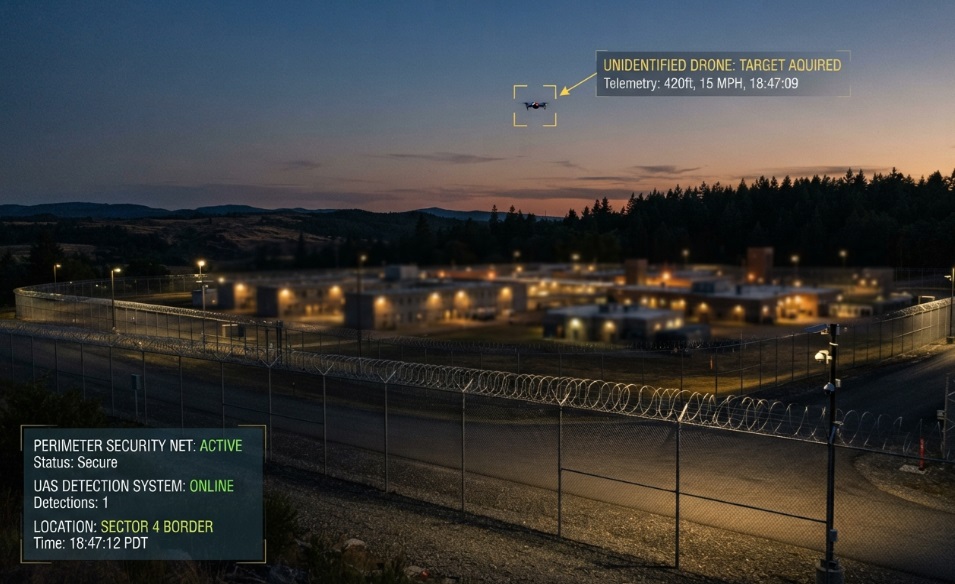
For decades, facility managers and security directors across the energy sector have prioritized ground-level physical security. Perimeter fences, reinforced gates, high-definition closed-circuit television cameras, and round-the-clock armed patrol guards form the conventional bedrock of plant defense networks. However, modern operational security must evolve past horizontal boundaries.
As unmanned aerial vehicle technology proliferates across industries, integrating robust drone detection for power plants has shifted from an experimental upgrade to an urgent operational requirement.
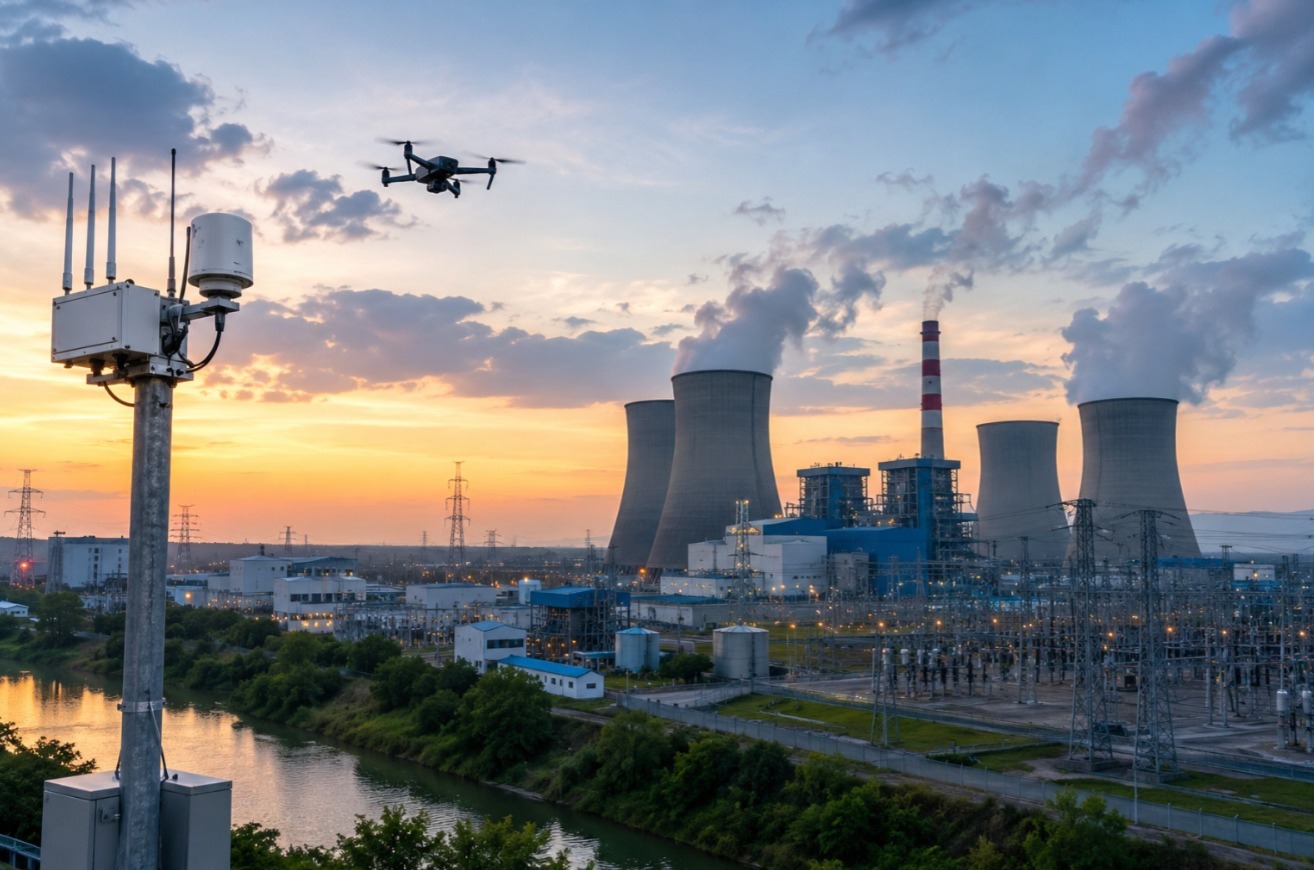
Nuclear generation plants, hydroelectric dams, coal and natural gas facilities, and electrical substations face an escalating number of low-altitude airspace incursions. Because these critical utility assets support entire regional economies and ensure public health, maintaining continuous situational awareness across the sky is just as vital as locking facility gates.
Statistics from federal infrastructure watchdogs indicate a sharp upward trajectory in unannounced UAV flights over sensitive industrial zones. Most of these incursions happen quietly.
A drone crosses the property line, navigates above transformer yards or turbine halls, captures high-definition thermal imaging and topographical data, and exits the airspace in under five minutes.
In many traditional security setups, plant operators remain completely unaware that an aerial breach occurred until forensic audits or security reviews take place months later. Closing this vertical security gap requires adopting specialized airspace intelligence platforms designed specifically for energy facilities.
Understanding the Emerging Risks Posed by Unauthorized Drones
While commercial drones bring incredible inspection efficiency, asset mapping capabilities, and maintenance advantages to modern energy operations, that same technological accessibility creates serious security exposures. Power generation facilities and electrical transmission substations represent high-value targets for malicious actors, industrial espionage, and careless hobbyists. Implementing drone detection for power plants protects facilities against four primary operational risks:
- High-Resolution Surveillance & Reconnaissance: Unauthorized UAVs can map intricate structural layouts, identify vulnerable control panels, and inspect security camera blind spots without triggering ground-level tripwires.
- Physical Collisions & Equipment Damage: Accidental pilot error or equipment failure can result in a drone colliding with high-voltage transformers, cooling towers, or power lines, causing catastrophic short circuits or localized fires.
- Costly Operational Disruptions: Even the perceived presence of an unauthorized aircraft over a sensitive energy facility can force precautionary shutdowns, emergency inspections, and expensive operational pauses.
- Regulatory & Compliance Violations: Energy operators operate under strict federal and state oversight. Unmanaged airspace breaches can lead to compliance audits, severe liability claims, and regulatory penalties.
Why Traditional Security Measures Fail Against Aerial Incursions
Traditional security infrastructure—no matter how robust on the ground—was never engineered to monitor or manage three-dimensional airspace. When an unknown aircraft hovers near a power generating station, visual spotting by human guards is largely ineffective. By the time a security officer sights a drone visually, establishes its position, and reports it up the chain of command, the UAV has typically completed its reconnaissance run and departed the area.
Human observation cannot capture critical telemetry data, determine the exact launch point, identify the operator’s physical location, or create a forensically defensible record for law enforcement. Relying on eyewitness accounts leaves plant management vulnerable to uncertainty. To achieve true situational control, security teams must deploy automated drone detection for power plants that operates continuously without human fatigue or blind spots.
Comprehensive Airspace Intelligence Solutions
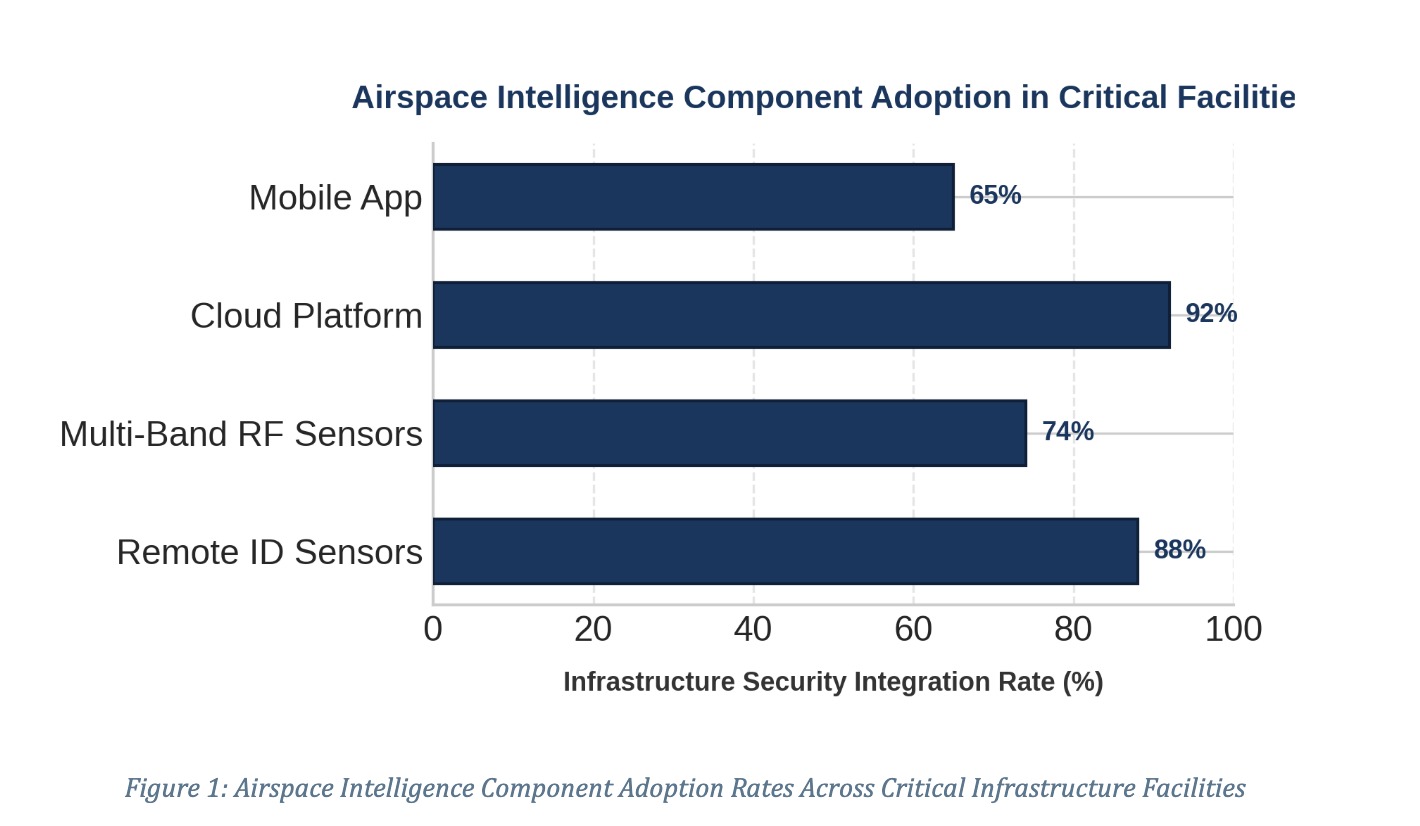
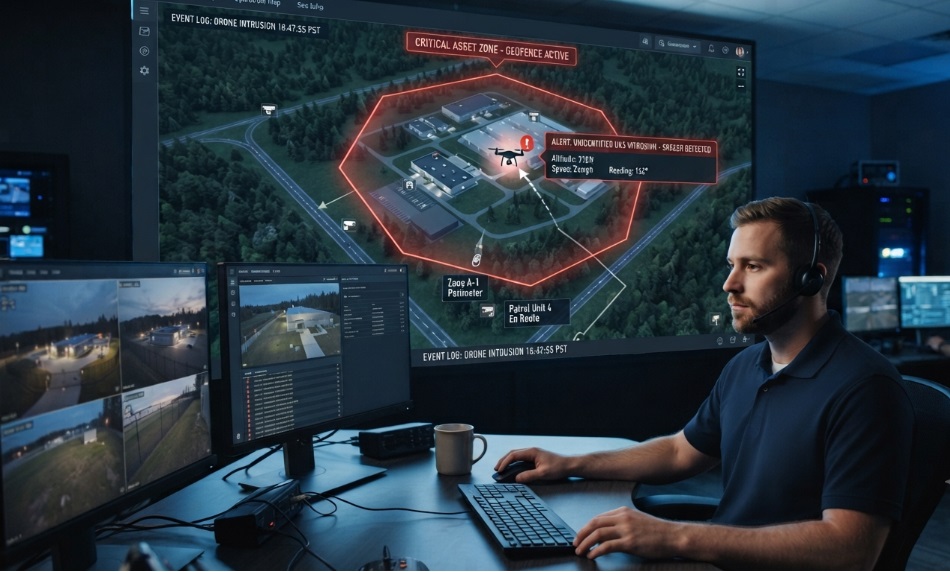
Modern airspace security relies on multi-layered hardware and cloud architectures designed to give organizations absolute confidence and control. Effective drone detection for power plants combines fixed and mobile hardware sensors with intuitive software dashboards. For instance, solutions provided by AirSentinel integrate seamlessly into existing security workflows without requiring specialized technical engineering teams.
The technological framework relies on several specialized components:
- Fixed and Mobile Hardware Sensors: Advanced sensor units—such as the AMS V8 and AMS V8 Pro multi-band Software-Defined Radio (SDR) systems—deliver 360-degree real-time detection of both Remote ID compliant drones and non-compliant, custom-built UAVs.
- Cloud-Native Platforms for Live Analysis: Cloud platforms offer real-time alerts, custom geofences, and watchlists that track airspace activity instantly while supporting unlimited users with zero per-user licensing fees.
- Agile Mobile Applications: Specialized mobile tools turn standard Android devices into portable detection units capable of identifying Remote ID drones within a 1,000 to 5,000-foot radius instantly.
By implementing drone detection for power plants, security directors can manage growing airspace operations effortlessly while maintaining full visibility across all regional sites.
Core Capabilities Required for Critical Infrastructure Protection
When evaluating security technology, utility operators must ensure their chosen system aligns with industrial standards. Effective drone detection for power plants must deliver specific functional capabilities to be truly valuable during high-stress security incidents:
- Instant Threat Classification: Distinguishing quickly between routine authorized maintenance drones and unknown, potentially hostile aircraft in real time.
- Operator Localization: Pinpointing the exact physical coordinates of the remote pilot, enabling security guards or local police to intercept the operator immediately.
- Historical Flight Telemetry Playback: Storing time-stamped logs of every flight path, altitude, speed, and duration for post-incident forensic investigations and regulatory audits.
- Seamless Inter-Agency Collaboration: Sharing live alerts and custom watchlists securely with municipal police departments and federal security partners without administrative friction.
Without these capabilities, security teams remain reactive rather than proactive. Integrating drone detection for power plants bridges the gap between raw data collection and decisive operational response.
Incident Response Protocols: Moving from Detection to Action
Advanced airspace intelligence systems are engineered to inform and empower security personnel rather than interfere with aircraft physically. In many legal jurisdictions, attempts by private entities to jam radio frequencies or shoot down aircraft carry severe criminal penalties and aviation safety violations. Therefore, standard operating procedures for drone detection for power plants focus strictly on legal documentation, tracking, and rapid law enforcement coordination.
When an unauthorized UAV enters facility airspace, the monitoring software triggers an immediate alert containing exact device IDs, coordinates, and flight trajectories. Security teams can then dispatch patrol units to the pilot’s launch location while simultaneously transmitting forensically sound evidence to local authorities. Utilizing drone detection for power plants drastically reduces threat response times compared to traditional visual spotting methods.
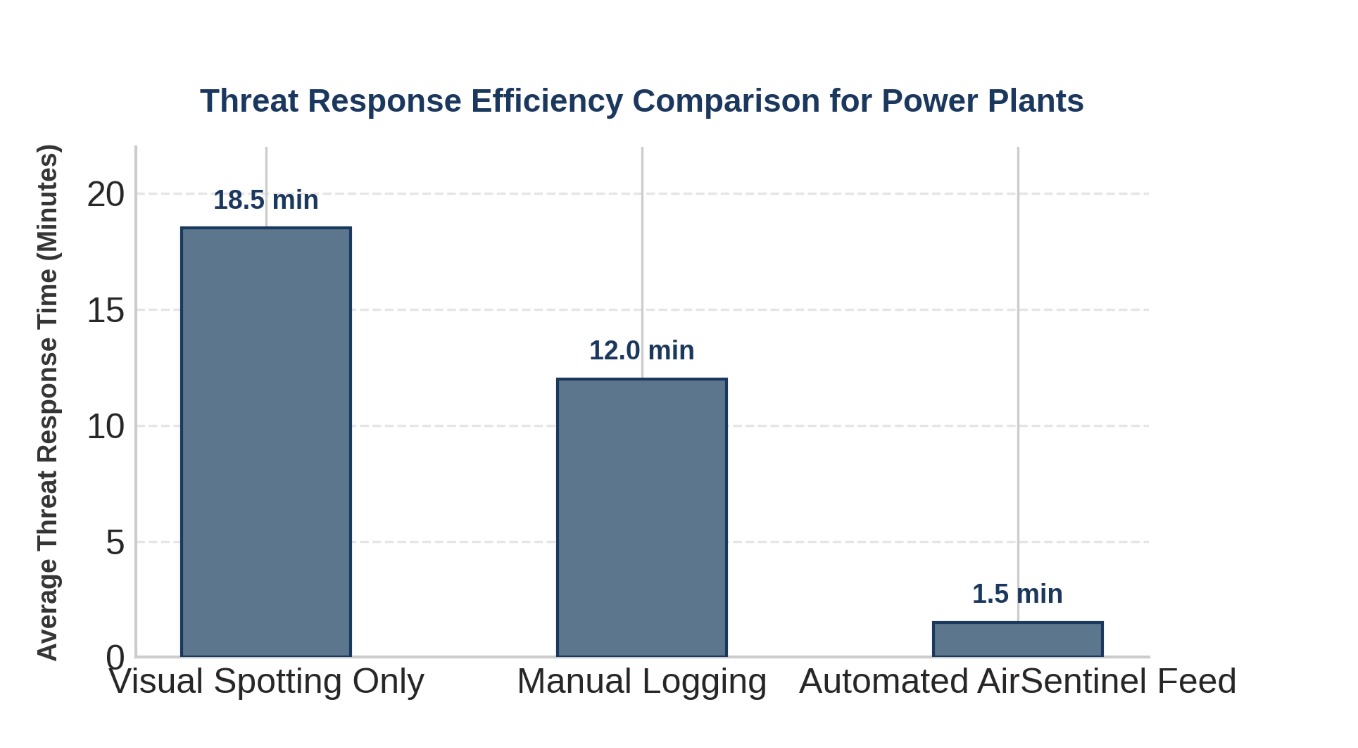
Figure 2: Average Threat Response Time Comparison Across Energy Facility Security Models
Scaling Airspace Defense Across Multi-Site Utility Networks
Energy companies typically operate numerous distributed facilities, including remote substations, regional power plants, and transmission hubs. Scaling security across multiple locations can introduce complex administrative costs if systems charge per-user licensing fees. Implementing drone detection for power plants with cloud-native architectures ensures that organizations can add new sensors and unlimited users seamlessly into a centralized dashboard.
Whether securing a single urban substation or an expansive rural generation complex, modern platforms allow security directors to configure customized geofences and instant alerts tailored to specific operational boundaries. By deploying drone detection for power plants, enterprise utilities establish a unified, impenetrable vertical security posture that protects assets from cityscapes to remote industrial zones.
Conclusion: Future-Proofing Energy Infrastructure Security
The airspace above our energy grid is busier and more vulnerable than ever before. Traditional ground-level perimeters are no longer sufficient to safeguard critical energy assets against sophisticated aerial threats. Utility operators must embrace comprehensive airspace intelligence to eliminate dangerous blind spots.
By integrating reliable drone detection for power plants, security leadership gains 360-degree visibility, precise operator tracking, and actionable intelligence that ensures continuous, safe operations. To learn more about protecting your facilities, explore AirSentinel and request a customized demonstration today.
Frequently Asked Questions (FAQ)
- Why do power plants need specialized drone detection systems?
Power plants maintain strong ground perimeters with fences and cameras, but the airspace above remains a critical blind spot. Unauthorized drones can capture sensitive facility layouts, create collision hazards near high-voltage equipment, and disrupt operations. Specialized detection provides real-time situational awareness that ground security cannot achieve.
- Can power plant security teams legally jam or shoot down unauthorized drones?
No. Private entities and commercial facility operators are legally prohibited from jamming radio frequencies, intercepting, or shooting down aircraft, including drones. Security protocols must focus exclusively on passive detection, documentation, tracking pilot locations, and coordinating with local law enforcement.
- Does AirSentinel require a dedicated IT or technical engineering team to operate?
No technical team is required. Hardware sensors feature straightforward plug-and-play installation, and companion mobile applications guide users through setup. Once online, the system operates continuously in the background with intuitive dashboards that require no specialized IT training.
- Can detection systems identify drones that do not broadcast Remote ID signals?
Yes. While standard sensors are fully optimized for Remote ID compliance, advanced hardware solutions incorporate multi-band Software-Defined Radio (SDR) technology to detect non-compliant, custom-built, or legacy UAVs by identifying unique signal anomalies and device fingerprints.
- How does a cloud-native platform help scale security across multiple utility sites?
A cloud-native platform allows operators to integrate multiple fixed and mobile sensors into a single centralized dashboard. Because systems support unlimited users with zero per-user licensing fees, security teams can expand monitoring coverage across regional substations seamlessly as operational needs grow.

 BLOG · SEP 22, 2026