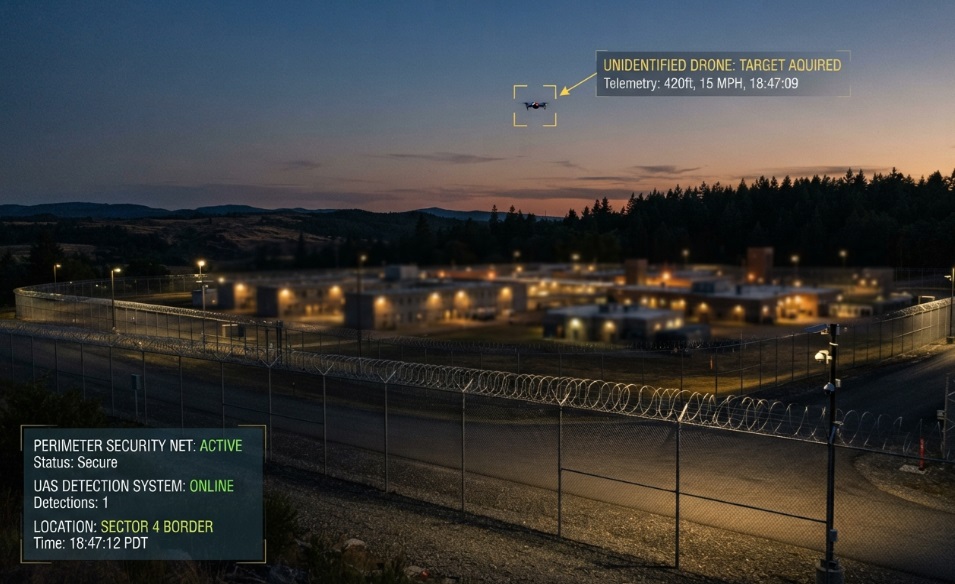
Mining sites are difficult to secure from the ground. They can span large areas, include pits, processing plants, stockpiles, haul roads, power systems, and remote access points, and operate far from a central security team. An unidentified drone can add another layer of risk by creating a fast, difficult-to-trace aerial intrusion.
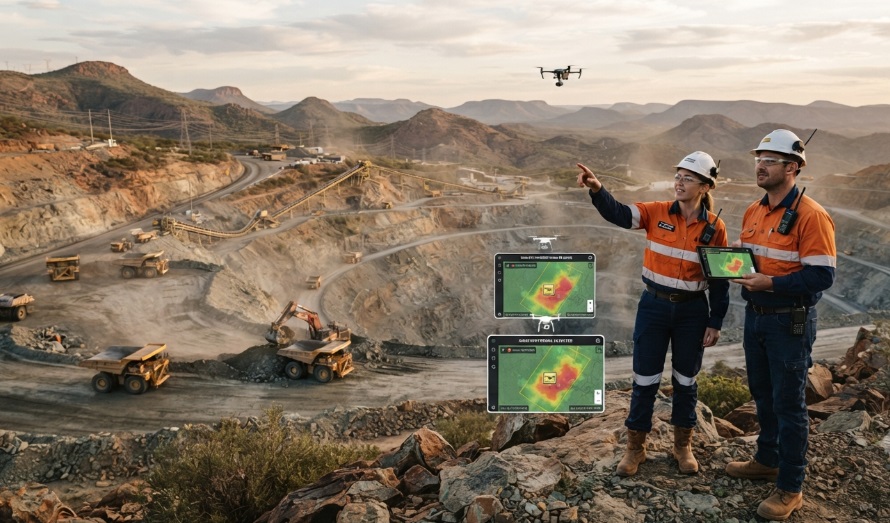
A well-designed drone detection for mining program gives security and operations teams a shared view of the airspace above the site. It can help them identify activity, understand where an aircraft is moving, determine whether a flight is authorized, and follow an established response process without disrupting legitimate work.
Why mining sites need airspace visibility
Mining operators already manage perimeter security, worker safety, mobile equipment, hazardous areas, environmental obligations, and production continuity. Drone activity intersects with all of them. A drone may be part of an approved survey mission, a contractor inspection, a media flight, or an unauthorized operation intended to observe sensitive activity.
The challenge is not simply seeing an aircraft. Teams need context: where it is, whether it has been seen before, whether its identity is known, which zone it entered, and what action the situation requires. That context turns an alert into an operational decision.
What drone detection means in a mining environment
Detection, identification, tracking, and response
Detection is the first step: recognizing that a drone or relevant signal is present. Identification adds information about the aircraft or signal. Tracking shows movement over time. Response is the human and organizational action that follows, such as verifying a work order, notifying site security, pausing a sensitive operation, or contacting the appropriate authorities.
These functions should not be treated as interchangeable. A system that produces alerts without location, history, or workflow context can create alarm fatigue. A useful platform helps teams move from detection to verification and documented response.
Remote ID and non-Remote ID aircraft
Remote ID can provide broadcast identification information from participating aircraft, but mining security teams should not assume every drone will present the same data. Custom-built, legacy, modified, or non-compliant aircraft may require other detection approaches. A layered program should account for both known and unknown activity, while clearly communicating what the system can and cannot identify in a particular environment.
Mining risks an airspace-monitoring system can address
Surveillance and intelligence gathering
Open-pit mines, processing facilities, pipelines, rail connections, stockpiles, and remote camps can expose operational information from above. Repeated flights may reveal schedules, equipment positions, access routes, or changes at a site. Detection records help establish whether activity is isolated or part of a pattern.
Safety, disruption, and restricted zones
A drone near blasting, lifting, aircraft operations, high-voltage infrastructure, or other controlled areas can create an immediate coordination problem. The right response depends on the site plan and the event, but early awareness gives the responsible team more time to verify the flight and protect people and assets.
Remote and hard-to-patrol sites
Remote locations often have fewer security personnel and longer response times. Fixed sensors, mobile monitoring, cloud access, and shared watchlists can help extend awareness beyond the main gate or control room. Coverage still needs to be designed around terrain, structures, radio conditions, and the site’s actual risk zones.
How a mining drone-detection program works
Establish the site airspace picture
Start by mapping the operating area. Mark critical assets, exclusion zones, landing areas, active work fronts, contractor staging areas, and locations where approved drone missions occur. This baseline makes it easier to distinguish normal activity from an alert that deserves investigation.
Classify alerts and verify activity
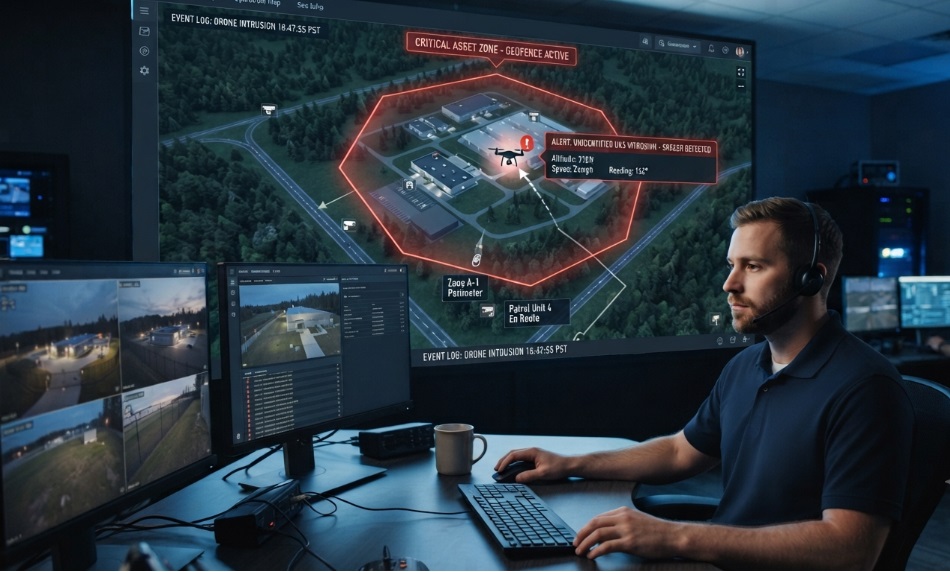
The security team should be able to compare an alert with flight approvals, contractor schedules, and known aircraft. Useful context may include time, location, direction of travel, identifier information, and prior sightings. A simple classification model—authorized, unknown, suspicious, or urgent—can make escalation consistent across shifts.
Connect alerts to response procedures
Detection technology does not replace site procedures. Define who receives alerts, who verifies them, when operations control is notified, how evidence is preserved, and when external agencies are contacted. Do not assume that detection equipment is authorized to jam, disable, seize, or take control of an aircraft; those actions raise separate legal, safety, and operational questions.
Capabilities to evaluate
Coverage and sensor placement
Ask how the system will cover the site’s priority areas rather than accepting a headline range as a complete answer. Pits, highwalls, buildings, terrain, electromagnetic interference, and network availability can affect performance. A site survey and phased pilot are more useful than a one-size-fits-all promise.
Remote ID, non-Remote ID, and custom aircraft
Confirm which aircraft and signals the platform is designed to detect, what information appears in an alert, and how the provider handles uncertain classifications. AirSentinel describes AMS V8 as supporting real-time detection of Remote ID and non-Remote ID drones, while AMS V8 Pro is positioned for more precise identification of unauthorized, custom-built, and legacy UAVs. [web:1]
Cloud access, watchlists, and collaboration
Distributed mining operations benefit when authorized users can access the same airspace picture without building a separate system for every location. Look for role-based access, watchlists, geofencing, alert history, and a workflow that can be shared with security, operations, and approved partners.
Evidence and reporting
Incident records should support after-action review. Teams may need timestamps, locations, tracks, identifiers, screenshots, notes, and escalation history. Reporting is valuable not only for an individual event but also for identifying recurring flight patterns and improving site procedures.
Deployment considerations for U.S. mining operations
A U.S. deployment should be coordinated with the site’s aviation, security, legal, and safety stakeholders. Confirm how approved drone work is logged, how Remote ID information is handled, who may receive alerts, and how the system fits with local emergency and law-enforcement relationships. Regulatory requirements and response authority can vary by situation, so operators should obtain current advice from qualified counsel and relevant authorities rather than treating a technology brochure as legal guidance.
The strongest program is usually the one that fits existing operations. Connect airspace alerts to the security desk or operations center, use clear escalation thresholds, and train staff on both ordinary and unusual events. The goal is not to create a second alarm system; it is to give the existing team better information at the right time.
A practical implementation checklist
- Define the assets and zones that require priority coverage.
- Document approved drone operators, contractors, missions, and launch areas.
- Survey terrain, structures, network access, and likely sensor locations.
- Set alert categories and assign an owner for each category.
- Pilot the system during normal operations and approved drone flights.
- Test shift handoffs, escalation, evidence capture, and external notification.
- Review false alarms, missed activity, and response times before expanding coverage.
- Reassess the program when site boundaries, equipment, or flight policies change.
Why AirSentinel fits distributed industrial sites
AirSentinel positions its platform around real-time airspace visibility, scalable monitoring, geofencing, watchlists, and collaborative access. Its product family includes fixed or mobile detection options, a cloud platform for alerts and control, and a mobile app for Remote ID detection. Those capabilities can be relevant to mining organizations that need to start with a priority area and expand across a distributed operation. [web:1]
For a mining deployment, the next step should be a site-specific discussion: identify the areas to protect, review expected authorized flights, understand coverage conditions, and define the response workflow before selecting a final configuration.
FAQs
1) What is drone detection for mining?
It is the use of airspace-monitoring technology and operating procedures to detect, identify, and track drone activity around a mining site so authorized teams can verify and respond to potential threats.
2) Why are mining sites vulnerable to drone activity?
Mining sites often cover large, remote areas with valuable assets, active work zones, and limited personnel. Ground patrols alone may not provide timely awareness of activity above pits, plants, stockpiles, camps, or access routes.
3) Can a system detect drones without Remote ID?
Capabilities vary by system and environment. AirSentinel states that its solutions support Remote ID and some non-Remote ID detection, including custom or legacy aircraft with advanced options. Operators should confirm expected detection performance during a site assessment.
4) Does drone detection automatically stop or disable a drone?
Not necessarily. Detection, tracking, and mitigation are different functions. A detection platform can provide information and alerts, while any intervention must be assessed separately for legal authority, safety, and operational consequences.
5) Where should sensors be installed at a mine?
Prioritize critical assets, controlled airspace, active work zones, likely approach paths, and areas where terrain or structures create visibility challenges. Final placement should follow a site survey rather than a generic distance estimate.
6) How should authorized drone flights be handled?
Create a simple approval and notification process. Record the operator, aircraft, mission area, schedule, and responsible contact so security staff can distinguish expected activity from unknown activity.
7) Can mining teams monitor more than one site?
A cloud-based platform can make multi-site access and shared watchlists easier, but the practical result depends on connectivity, permissions, sensor architecture, and the organization’s operating model.

 BLOG · SEP 22, 2026