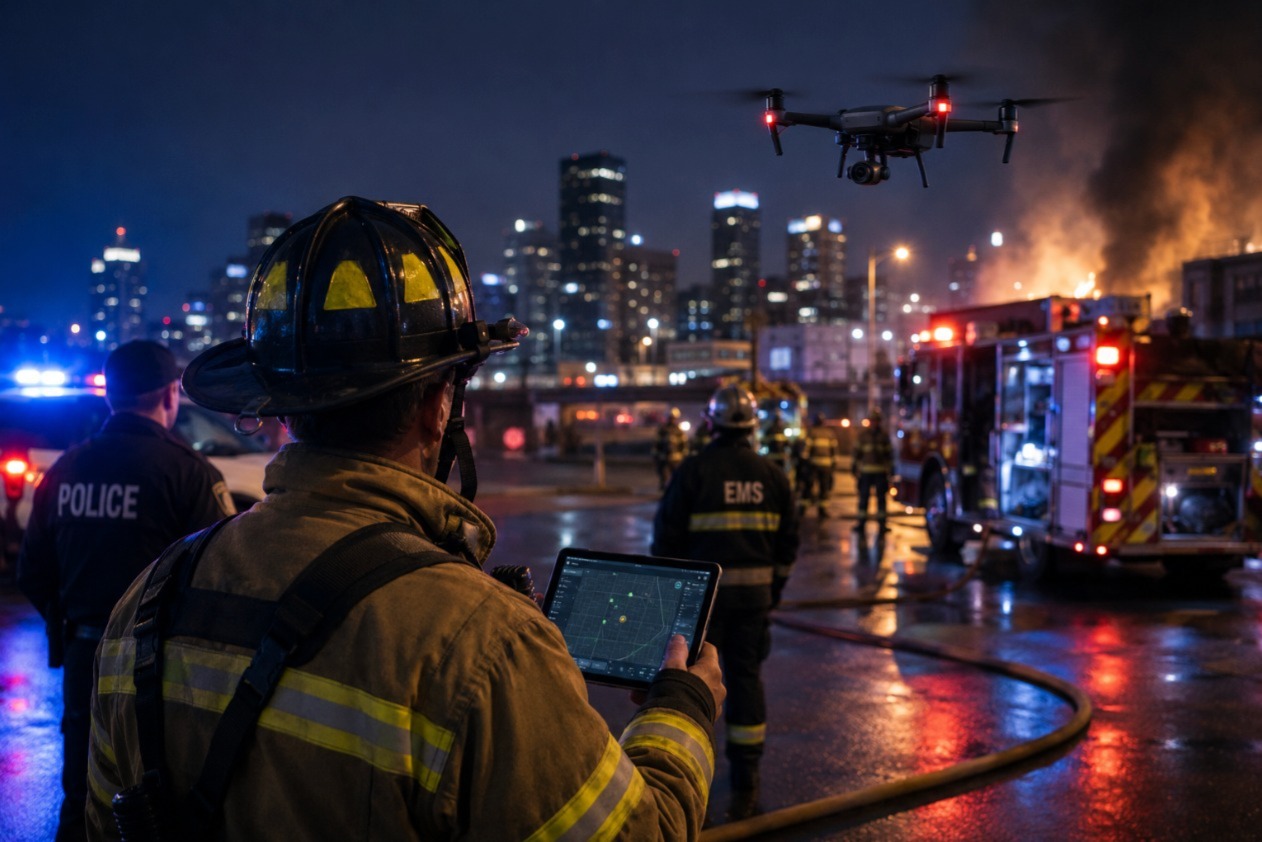
Emergency scenes evolve in minutes; fire conditions shift, crowds move, and new hazards appear without warning. First responders need accurate, real-time information to make safe, informed decisions. But traditional ground-level visibility often limits what teams can see during an active incident. That’s where drone detection becomes critical.
AirSentinel provides 360-degree airspace visibility with advanced, seamless, and scalable counter-drone technology built for 24/7 monitoring from cityscapes to secure defense zones. For law enforcement and first responders, this means the ability to detect, track, and respond to drone activity instantly, improving situational awareness without interfering with operations.
Drone detection for first responders has become essential in modern emergency management. When unauthorized drones enter restricted airspace during critical incidents, they create safety risks, compromise operational security, and hinder response efforts. AirSentinel’s drone detection for first responders delivers the real-time intelligence emergency teams need to stay in control.
In this post, we’ll explain how drone detection supports first responders, why situational awareness matters in emergencies, and how AirSentinel’s solutions like the AMS V8, Cloud Platform, and free Mobile App help agencies protect public safety with actionable airspace monitoring.
What Is Drone Detection for First Responders?
Drone detection for first responders refers to the use of advanced sensors and software to identify unauthorized or unknown drones in real time during emergency operations. Unlike systems that deploy drones as tools, detection systems like AirSentinel focus on monitoring airspace to provide actionable intelligence about drone activity.
AirSentinel was built to solve a core problem: how to secure airspace simply, affordably, and reliably. The platform combines advanced detection technology with solutions that are easy to deploy, easy to use, and made to scale. With deep expertise in UAS operations and regulatory compliance, AirSentinel helps organizations including law enforcement and first responders, protect critical operations with real-time intelligence.
For first responders, drone detection for first responders means receiving alerts with details like a drone’s ID, location, and flight path, so security teams can decide how to respond, whether that’s tracking the drone, notifying authorities, or activating internal protocols. The system doesn’t jam signals or take control of drones, which would raise legal and safety concerns in many jurisdictions.
Effective drone detection for first responders requires technology that works in diverse environments. AirSentinel’s sensors detect both Remote ID and non-Remote ID drones, ensuring comprehensive coverage even when operators don’t comply with regulations. This capability is crucial for emergency teams managing incidents where every unknown aircraft represents a potential threat.
Why Situational Awareness Matters in Emergencies
Situational awareness is the ability to understand what is happening during an incident and predict how conditions may change. For firefighters, police departments, EMS teams, and disaster response crews, strong situational awareness improves safety and reduces response times. Drone detection for first responders directly enhances this capability by providing continuous airspace monitoring.
Without aerial visibility, responders may struggle to identify hazards, locate victims, or monitor large scenes. Ground crews can only see so much from street level. Buildings, smoke, darkness, and debris often limit visibility during emergencies. When unauthorized drones enter these already complex environments, they add another layer of risk that ground teams cannot detect without specialized equipment.
Drone detection for first responders helps solve these challenges by providing an elevated perspective with live alerts and full airspace monitoring. Incident commanders can monitor events in real time and make decisions using updated visual intelligence instead of relying on limited field reports alone. This real-time visibility transforms how emergency teams respond to evolving threats.
AirSentinel’s Cloud Platform makes airspace monitoring simple and powerful, giving first responders real-time drone detection, alerts, and full control free for first responders. The platform’s collaborative features allow agencies to share alerts and watchlists seamlessly with partner organizations, creating a unified operational picture across multiple jurisdictions.
Key Benefits of Drone Detection for First Responders
Faster Threat Identification
AirSentinel’s AMS V8 delivers 360-degree real-time detection of Remote ID and non-Remote ID drones, with flexible deployment for mobile or fixed operations. This allows first responders to identify unauthorized drones quickly, before they become a threat to public safety or operational security.
Drone detection for first responders must work in seconds, not minutes. During active incidents, even brief delays in identifying airborne threats can compromise responder safety and mission success. The AMS V8’s multi-band SDR system provides precise identification of unauthorized drones, including custom-built and legacy UAVs that may not broadcast standard signals.
Real-world performance data shows that AirSentinel’s detection range covers 1,000 to 5,000 feet depending on environmental conditions and drone type. This coverage radius gives first responders adequate time to assess threats and implement appropriate countermeasures before drones reach critical proximity.
Real-Time Alerts and Collaboration
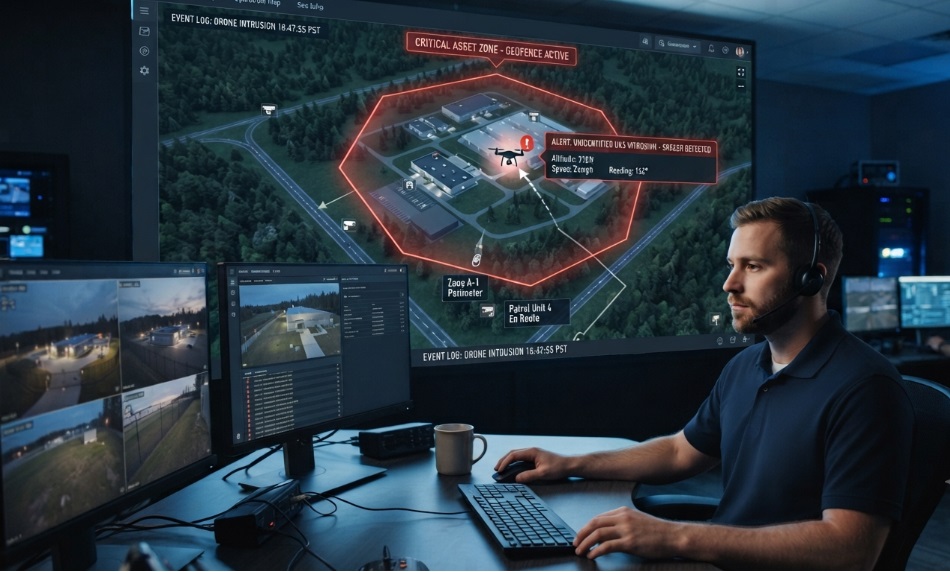
When a drone is detected, AirSentinel sends alerts with actionable details ID, location, and flight path so teams can respond immediately. The platform is designed to be collaborative, allowing agencies to share alerts and watchlists seamlessly with partner organizations.
Drone detection for first responders becomes exponentially more valuable when multiple agencies can coordinate responses. During large-scale emergencies involving fire departments, law enforcement, and EMS, shared situational awareness prevents confusion and ensures all teams operate from the same intelligence picture.
The Cloud Platform’s alert system integrates with existing communication workflows, so responders receive notifications through channels they already use. This integration reduces training overhead and accelerates adoption across diverse emergency response teams.
Cost-Effective and Scalable
AirSentinel offers free access for first responders and inclusive pricing with no per-user fees. The system is highly scalable: agencies can add more sensors to cover larger areas and expand access without extra licensing costs.
Budget constraints often limit public safety agencies’ ability to adopt new technologies. Drone detection for first responders shouldn’t require massive capital investments or ongoing per-user licensing fees. AirSentinel’s pricing model removes these barriers, making advanced airspace monitoring accessible to departments of all sizes.
Scalability matters as operational needs grow. A small fire department might start with a single sensor covering their primary response area. As the program proves its value, they can expand coverage to neighboring jurisdictions or add sensors at critical infrastructure sites without renegotiating contracts or paying per-user fees.
Simple and Intuitive Deployment
AirSentinel was designed to be intuitive and accessible right out of the box. Sensors deploy quickly, the mobile app walks users through setup, and the system runs continuously in the background. No dedicated IT or security tech team is required.
Many drone detection systems demand specialized training or technical expertise to operate effectively. Drone detection for first responders must work for organizations without dedicated aviation or IT staff. AirSentinel’s plug-and-play sensors and guided mobile app setup eliminate the need for specialized technical teams.
Installation typically takes minutes, not hours. Once online, the system runs continuously in the background, monitoring airspace 24/7 without requiring constant operator attention. If support is needed, AirSentinel’s team is available via call or email no ticketing systems or delayed responses.
Real-World Use Cases for First Responders
Public Events
Secure large gatherings by detecting and stopping unauthorized drones. AirSentinel has been trusted during major public events, where real-time alerts were invaluable for monitoring drone activity effectively.
During concerts, sporting events, or political rallies, unauthorized drones pose safety risks to crowds and complicate security operations. Drone detection for first responders at public events provides security directors with the tools to identify threats before they become incidents.
A security director at a major public event organization reported: “AirSentinel provided the tools we needed to monitor drone activity effectively during a major public event. The real-time alerts were invaluable.” This testimonial reflects the operational value drone detection delivers in high-stakes environments.
Law Enforcement Operations
Empower teams to detect, track, and respond to drone activity instantly. AirSentinel supports law enforcement and first responders with real-time detection and interception capabilities.
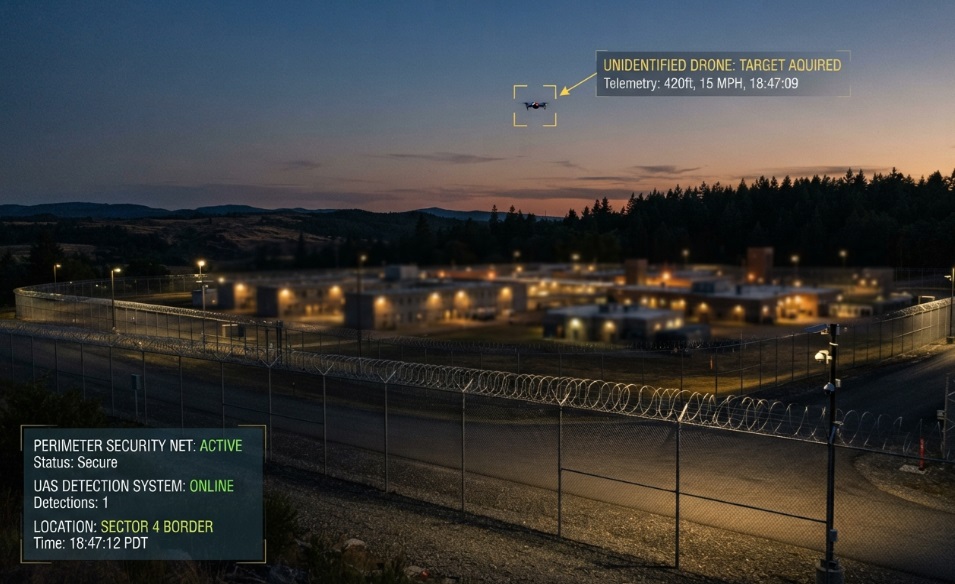
Police departments use drone detection to monitor tactical situations, protect crime scenes from aerial surveillance, and prevent contraband drops at correctional facilities. Drone detection for first responders in law enforcement contexts provides commanders with airspace intelligence that complements ground-based surveillance.
When drones are detected near sensitive operations, officers receive immediate alerts with flight path data. This information helps teams determine whether the drone represents a threat, a curious bystander, or a coordinated surveillance effort enabling appropriate responses without escalating situations unnecessarily.
Critical Infrastructure Protection
Protect critical sites from drone threats and ensure continuous operations. AirSentinel’s solutions adapt to any environment, ensuring safe skies over airports, military sites, and sensitive operations.
Airports face growing drone intrusion risks that can ground flights and disrupt operations. Drone detection for first responders at airports provides airfield managers with early warning of unauthorized aircraft, allowing them to coordinate with air traffic control and law enforcement before flights are impacted.
Oil, gas, and mining operations also benefit from drone detection. Industrial sites are vulnerable to aerial surveillance, sabotage, and smuggling attempts. Continuous airspace monitoring helps security teams identify and respond to threats before they compromise operations or safety.
How AirSentinel Supports First Responders
AirSentinel offers a suite of solutions tailored to first responder needs, each designed to deliver reliable drone detection for first responders in diverse operational contexts:
AMS V8: Delivers 360-degree real-time detection of Remote ID and non-Remote ID drones, with flexible deployment for mobile or fixed operations. Ideal for agencies needing portable detection capabilities or permanent installation at critical sites.
AMS V8 Pro: Advanced multi-band SDR system for precise identification of unauthorized drones, including custom-built and legacy UAVs. This professional-grade system provides enhanced detection accuracy for high-security environments.
Cloud Platform: Makes airspace monitoring simple and powerful. Get real-time drone detection, alerts, and full control for free for first responders. The cloud-native architecture ensures you’re always getting real-time updates without worrying about server maintenance.
Mobile App: Turns your Android phone into a free, real-time drone detection tool. Detect Remote ID drones within 1,000 to 5,000 feet, no account needed. iOS support coming soon. This app provides immediate detection capability for individual responders or small teams.
These tools give first responders more than alerts; they provide confidence and control. Drone detection for first responders through AirSentinel means agencies can deploy quickly, monitor from their phones, and scale up without per-user licensing fees.
Conclusion: Take Control of Your Airspace
AirSentinel gives first responders the tools to monitor drone activity effectively, with real-time alerts and full airspace visibility. From public events to law enforcement operations, AirSentinel’s scalable, cost-effective solutions help agencies stay in control while protecting public safety.
Drone detection for first responders is no longer optional it’s essential. As drone usage grows across commercial, recreational, and malicious applications, emergency teams need reliable tools to identify and respond to airborne threats. AirSentinel delivers that capability with technology that’s simple to deploy, affordable to operate, and powerful enough to handle evolving threats.
Ready to improve situational awareness during emergencies? Contact AirSentinel today to learn more about drone detection for first responders and how our solutions can protect your operations. Visit https://airsentinel.ai/ to explore our full range of detection systems and start securing your airspace today.
Frequently Asked Questions
What sets AirSentinel apart from other drone detection systems?
AirSentinel combines simplicity and effectiveness. Unlike many systems that require specialized training or expensive hardware, AirSentinel is intuitive and accessible right out of the box. Sensors deploy quickly, the mobile app walks you through setup, and the cloud-native platform provides real-time updates without server maintenance. There are no per-user licensing fees, making it cost-effective for growing teams.
Drone detection for first responders demands technology that works immediately, not after weeks of training. AirSentinel’s design philosophy prioritizes accessibility so organizations without dedicated IT or security tech teams can deploy and operate the system effectively.
Do I need a technical team to set up and operate AirSentinel?
Not at all. AirSentinel is built for organizations without dedicated IT or security tech teams. Installation is straightforward (plug-and-play for the sensors), and the mobile app walks you through the setup. Once online, the system runs continuously in the background. And if you ever need help, AirSentinel’s support team is just a call or email away.
This accessibility makes drone detection for first responders feasible for departments of all sizes, from small volunteer fire companies to large metropolitan police forces.
Can AirSentinel detect drones without Remote ID signals?
Great question because not every drone plays by the rules. While AirSentinel’s sensors are optimized for Remote ID signals (which are increasingly required by law), they can also detect some non-compliant or custom drones by identifying signal anomalies and device fingerprints. AirSentinel is actively expanding detection capabilities as the drone landscape evolves, so you’re always ahead of emerging threats.
This dual-detection capability is essential for drone detection for first responders, since threat actors may intentionally disable Remote ID or use modified drones that don’t broadcast standard signals.
What happens when AirSentinel detects a drone?
AirSentinel is designed to inform and empower, not interfere. When a drone is detected, you’ll receive an alert with details like its ID, location, and flight path. From there, your security team can decide how to respond whether that’s tracking the drone, notifying authorities, or activating your own security protocols. AirSentinel doesn’t jam signals or take control of drones, which would raise legal and safety concerns in many jurisdictions.
This approach ensures drone detection for first responders enhances decision-making without creating additional legal or operational risks for emergency agencies.
Is AirSentinel free for first responders?
Yes. AirSentinel offers free access for first responders through its Cloud Platform and Mobile App, with inclusive pricing and no per-user fees for scaling operations. This commitment reflects AirSentinel’s mission to make advanced airspace monitoring accessible to the agencies that protect public safety every day.
Free access removes financial barriers that might prevent smaller departments from adopting drone detection for first responders, ensuring all emergency teams can benefit from real-time airspace awareness regardless of budget constraints.

 BLOG · SEP 22, 2026