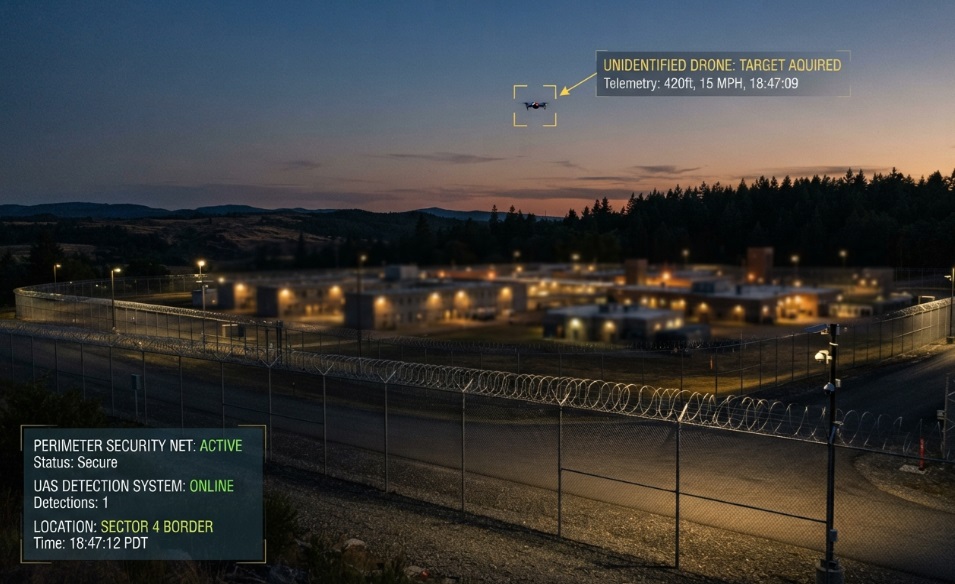
Critical infrastructure operators face an escalating challenge: unauthorized drones operating in protected airspace. From power plants to correctional facilities, security teams need immediate visibility into low-altitude threats before incidents escalate. Real-time drone detection has become essential for facilities managing sensitive operations across the United States.
This guide covers what security teams must monitor, how modern detection systems work, and why AirSentinel approach delivers reliable airspace awareness for critical infrastructure. We will examine specific use cases, deployment considerations, and selection criteria based on real-world operational requirements.
The Growing Drone Threat to Critical Infrastructure
Low-altitude airspace has emerged as a crucial security concern for critical infrastructure. Commercially available drones have introduced operational risks that many facilities are still learning to evaluate. The Federal Aviation Administration reported 411 illegal drone incursions near US airports in Q1 2025 alone, representing a 25.6% year-over-year increase.
Recent incidents underscore the urgency:
- Drones overflying sensitive sites including military bases and critical facilities
- Contraband smuggling into correctional facilities via drones carrying phones, drugs, and weapons
- Surveillance and espionage targeting industrial operations and trade secrets
- Coordinated disruption of distributed energy operations
Building airspace awareness is the first step. Before determining whether drone activity is authorized, careless, suspicious, or potentially hostile, security teams need reliable detection capabilities. Real-time drone detection provides the foundation for effective airspace security.
What Security Teams Must Monitor in Real Time
1. Drone Presence and Identification
Modern detection systems identify both Remote ID-compliant drones and non-compliant dark drones that operate without broadcast signals. AirSentinel AMS V8 delivers 360-degree real-time detection of Remote ID and non-remote ID drones, while the AMS V8 Pro uses advanced multi-band SDR technology for precise identification of unauthorized drones, including custom-built and legacy UAVs.
Real-time drone detection ensures security teams see every drone entering protected airspace, not just those broadcasting identification signals. This capability is critical for facilities where even a single unauthorized drone can compromise operations.
2. Location and Flight Path Data
Security teams need:
- GPS coordinates of detected drones with accuracy within meters
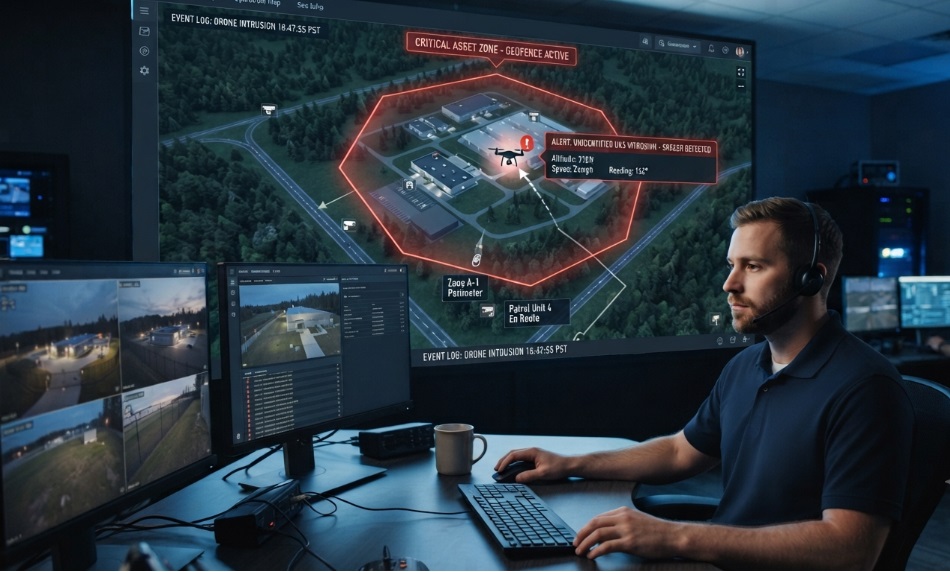
- Altitude, speed, and heading information for trajectory analysis
- Live tracking and telemetry to determine flight patterns
- Historical logs for drones that repeatedly breach protected areas
This data helps determine if drones are flying in restricted airspace, beyond line of sight illegally, or over workers on job sites. Real-time drone detection provides the continuous monitoring needed to track these patterns and build intelligence on repeat offenders.
3. Pilot/Operator Location
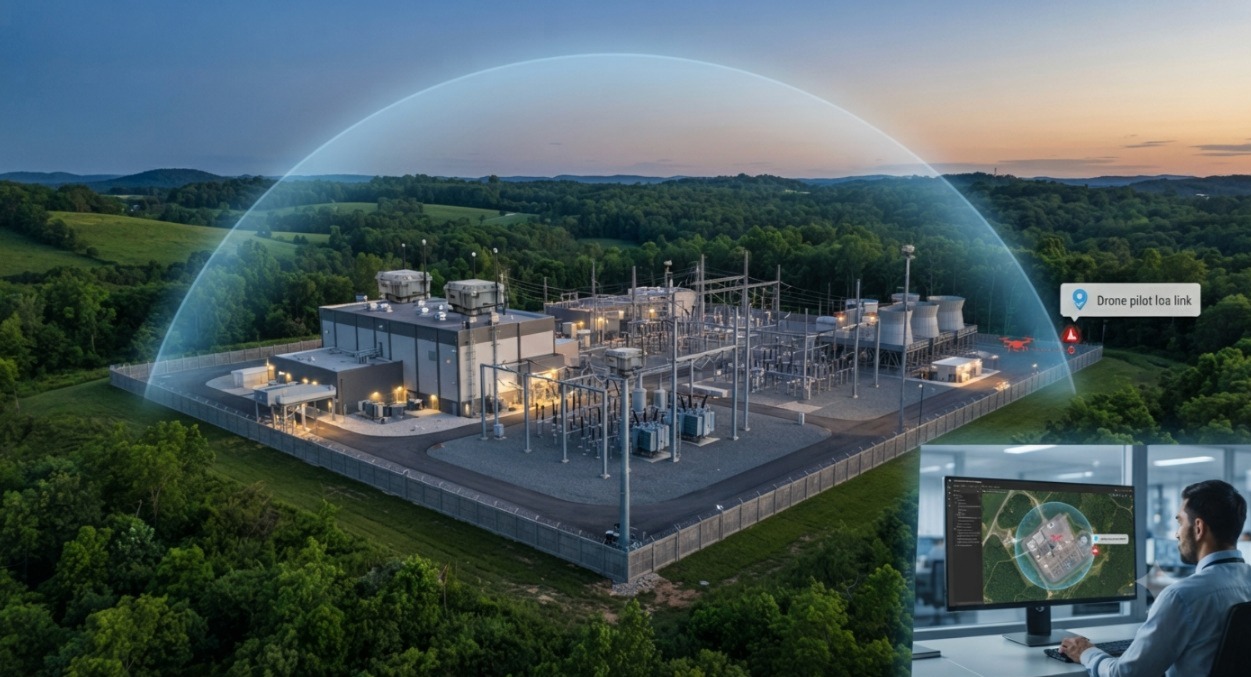
Advanced systems track not only the drone but also the pilot or remote controller location. When a drone is detected, security teams receive alerts with two map links: one for the drone and another for the pilot location. Understanding operator identity and intent is critical for safe and effective response.
4. Geofence Breaches and Custom Alerts
Security teams can create custom geofences around areas they want to protect. When a drone breaches that geofence, an alert is raised and sent to designated security personnel. AirSentinel cloud platform provides real-time drone detection, alerts, and full control, free for first responders.
5. Integration with Existing Security Operations
Detection data should integrate with:
- GSOCs and SOCs (Global and Security Operations Centers)
- VMS and PSIM platforms (Video Management and Physical Security Information Management)
- CAD and SIEM systems (Computer-Aided Dispatch and Security Information Event Management)
- Law enforcement and FAA reporting for enforcement support
AirSentinel Solutions for Critical Infrastructure
AirSentinel AMS V8
The AMS V8 provides 360-degree real-time detection with flexible deployment for mobile or fixed operations. The system features:
- Built-in LTE connectivity for immediate cloud integration
- Weather-proof cabinet design for outdoor deployment
- Single ethernet cable connection simplifying installation
- Standard 110v power outlet operation
Detection range averages 3-5 miles in typical environments, with the AMS V8 Pro detecting drones up to 10 miles away in wide open flat lands. Real-time drone detection at this scale ensures comprehensive airspace coverage for large facilities.
AirSentinel AMS V8 Pro
For advanced requirements, the V8 Pro offers:
- Multi-band SDR (Software-Defined Radio) system
- Precise identification of unauthorized drones
- Detection of custom-built and legacy UAVs
- Enhanced RF fingerprinting capabilities
The cloud-native platform makes airspace monitoring simple and powerful:
- Real-time drone detection and alerts
- Unlimited users with no per-user licensing fees
- Scalable deployment, add more sensors to cover larger areas
- Seamless integration of new devices and users into the same dashboard
AirSentinel Mobile App
For rapid deployment or supplementary monitoring:
- Turns Android phones into free, real-time drone detection tools
- Detects Remote ID drones within 1,000-5,000 feet
- No account required
- iOS support coming soon
Critical Infrastructure Use Cases
AirSentinel solutions adapt to various environments, ensuring safe skies over critical sites:
Airports and Transportation Hubs
Prevent drone intrusions and keep flights safe and on time. Airports detect 95% of Remote ID drones but need advanced systems to address dark drone threats. Real-time drone detection helps identify unauthorized operations before they disrupt flight schedules.
Energy and Utility Sites
Protect oil, gas, and mining operations from drone surveillance and sabotage. Secure industrial sites by blocking unauthorized aerial monitoring. Power plants and substations require continuous airspace monitoring.
Correctional Facilities
Stop drones from smuggling contraband and conducting unauthorized surveillance. Detection systems help identify delivery attempts before contraband reaches inmates.
Maritime and Ports
Protect shipping hubs by stopping drone threats and preventing disruptions. Monitor airspace around cargo operations and sensitive port facilities.
Public Events and Stadiums
Secure large gatherings by detecting and stopping unauthorized drones. Prevent drone intrusions to protect crowds and maintain venue safety.
Military and Government
Defend sensitive operations with real-time drone detection and interception capabilities. Support Section 2209 compliance for critical infrastructure protection.
Why AirSentinel for Critical Infrastructure Protection
Scalable Architecture
Manage growing airspace operations effortlessly with unlimited users and watchlists. Add more sensors to cover larger areas without per-user licensing fees.
Collaborative Operations
Share alerts and watchlists seamlessly with partner agencies and organizations. Coordinate response across multiple security teams and jurisdictions.
Cost-Effective Deployment
Enjoy free access for first responders and inclusive pricing with no per-user fees. Cloud-native architecture eliminates server maintenance costs.
Simple and Intuitive Interface
Streamline airspace management with easy-to-use dashboards and geofencing tools. No technical team required for setup and operation.
Real-World Results
AirSentinel provided the tools we needed to monitor drone activity effectively during a major public event. The real-time alerts were invaluable.
Security Director, Public Events Organization
AirSentinel gives you more than alerts; you get control.
Selecting the Right Drone Detection System
Detection Capabilities
- Look for systems with multi-sensor fusion combining radar, RF detection, and optical sensors
- Verify detection ranges of 3+ kilometers with 360-degree coverage
- Ensure track update rates above 8 hertz for accurate drone tracking
- Confirm micro-Doppler radar capability to distinguish drones from birds, reducing false positives by 85%
Reliability Factors
- 80% of drone detection systems fail within 2 years, costing millions
- Prioritize systems with solid-state components to avoid mechanical failures
- Ensure 24/7 operation capability with thermal imaging integration
- Verify weather resistance for year-round reliability
Next Steps for Security Teams
Effective planning begins with:
- Clear airspace picture through baseline detection
- Interoperability with existing security operations
- Disciplined escalation procedures for detected threats
- Systems that work inside existing security operations
AirSentinel helps critical infrastructure owners prepare with:
- Eligibility and threshold analysis
- UAS risk and vulnerability assessments
- Remote ID and airspace activity documentation
- Right-sized restriction planning
- FAA-facing application materials
Secure Your Airspace Today
Critical infrastructure operators need reliable, real-time drone detection to protect sensitive operations. AirSentinel delivers comprehensive airspace awareness with scalable deployment, intuitive operation, and cost-effective pricing. Learn more about AirSentinel solutions at airsentinel.ai for your facility.
Real-time drone detection is no longer optional for critical infrastructure. Security teams must monitor drone presence, location, flight paths, and operator information to maintain effective airspace security. AirSentinel provides the tools needed to detect, track, and respond to unauthorized drone activity before incidents escalate.
Frequently Asked Questions
What is real-time drone detection and why is it important?
Real-time drone detection is the immediate identification and tracking of unauthorized drones with location data. It is important because traditional security systems cannot see aerial threats, leaving critical infrastructure vulnerable to surveillance, contraband delivery, and potential sabotage.
How far can drone detection systems detect unauthorized drones?
Detection range varies by environment. Average range is 3-5 miles in typical environments. In wide open flat lands, advanced systems have detected drones up to 10 miles away. Urban environments may reduce range due to obstacles and interference.
Can drone detection work without line of sight?
Yes. Acoustic and RF sensors detect drones behind obstacles and in non-line-of-sight conditions. This capability is essential for facilities with complex terrain or multiple buildings.
What types of critical infrastructure need drone detection?
Prisons, airports, data centers, power plants, public venues, military bases, and government facilities all need drone detection. Any site with sensitive operations or restricted airspace benefits from real-time drone detection.
How does drone detection integrate with existing security systems?
Detection data integrates with VMS, PSIM, access control, and alarm systems. This allows security teams to receive alerts in their existing workflows and coordinate response with existing protocols.

 BLOG · SEP 22, 2026