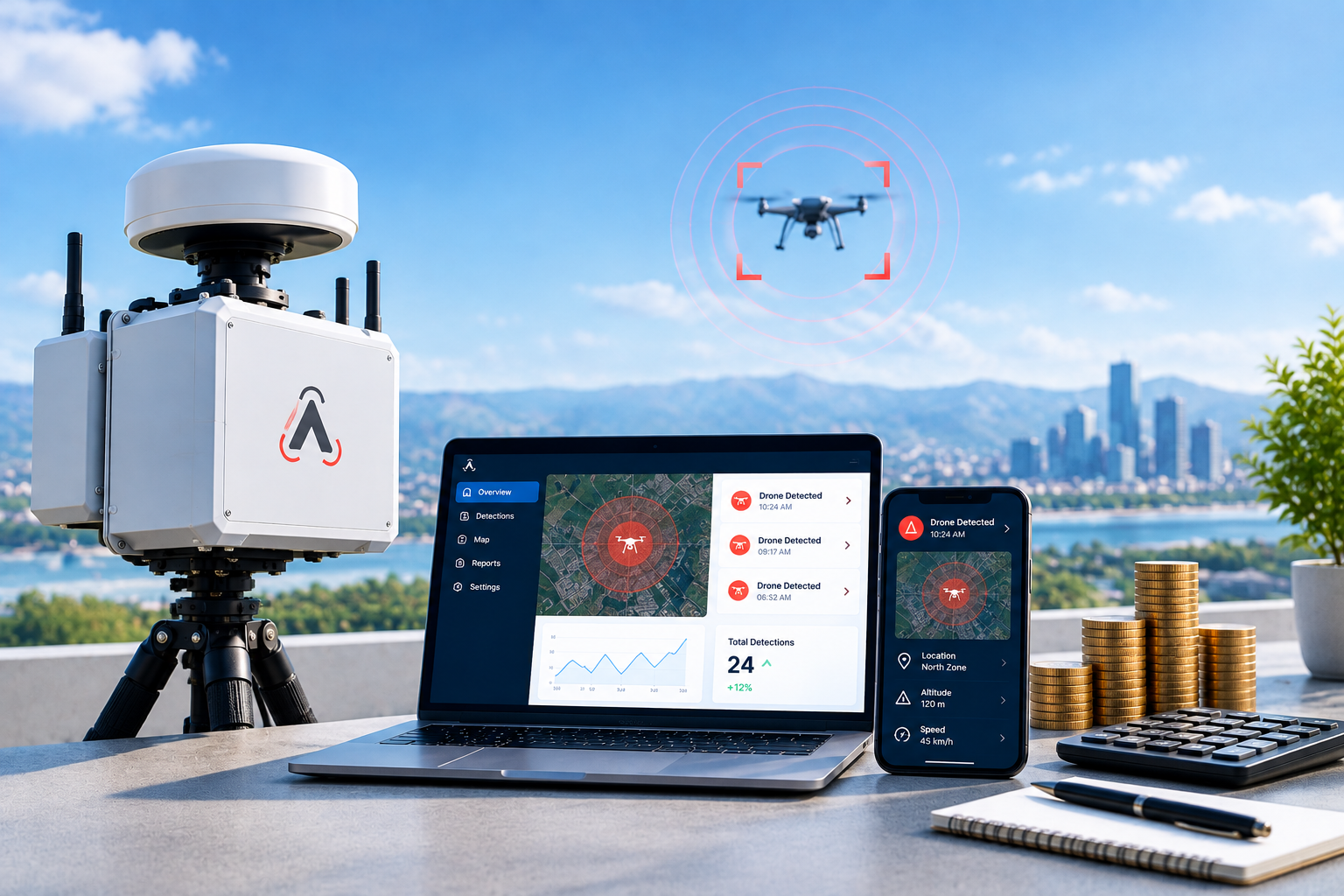
As unauthorized drone activity becomes
a growing concern for airports, critical infrastructure, government facilities,
industrial sites, stadiums, and other sensitive locations, organizations are
investing in advanced drone detection systems to maintain
awareness of the airspace around them.
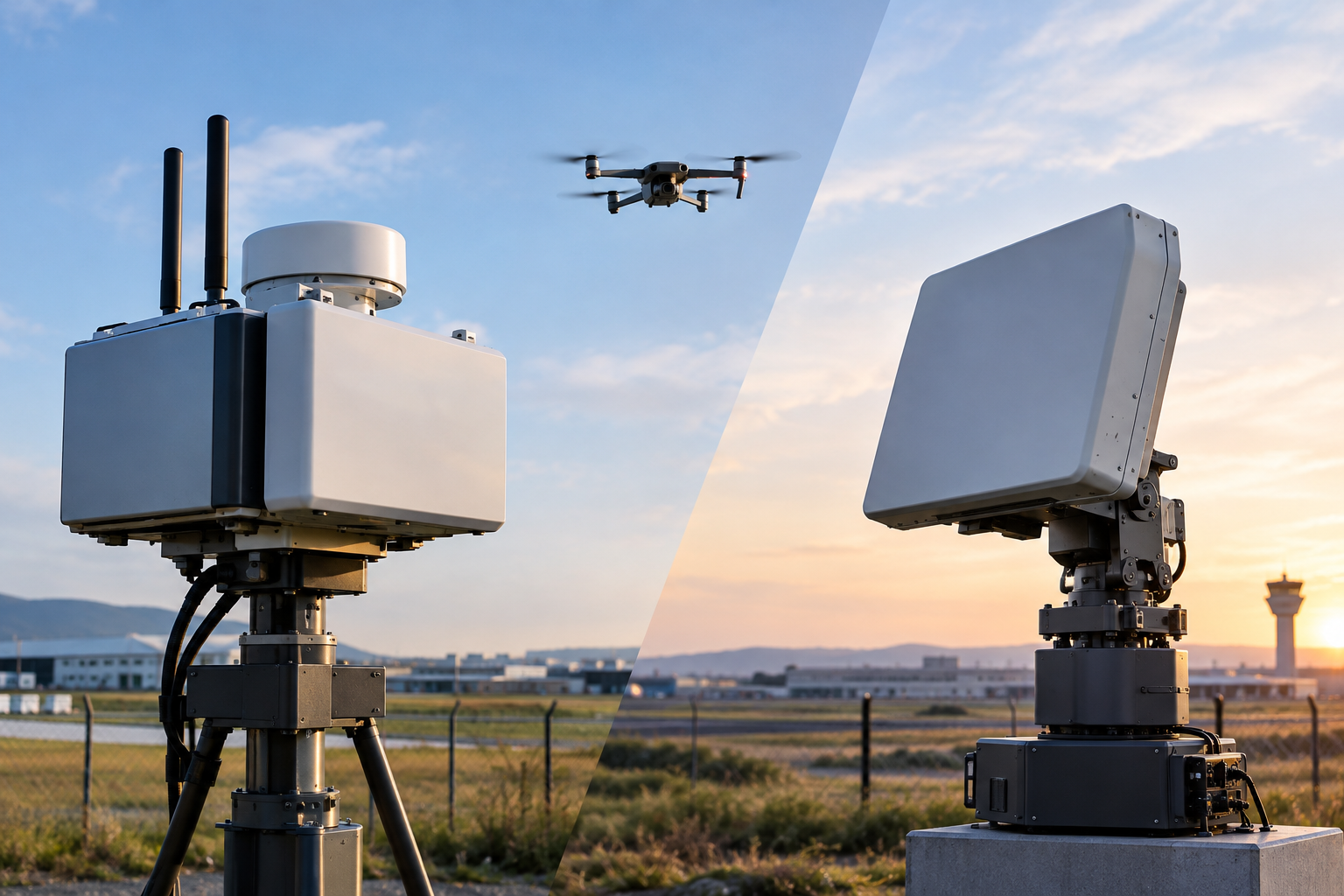
Two technologies worth comparing are AirSentinel
and Robin Radar.
Both can play an important role in
counter-UAS operations, but they approach drone detection differently.
AirSentinel combines RF and Remote ID sensing with radar and optical
integration, while Robin Radar focuses on radar-based detection, tracking, and classification.
So, which system is better?
The answer depends on what an
organization needs to detect, the size of the area being protected, the
required sensor coverage, and how the solution needs to integrate with existing
security systems.
What Is a Drone Detection System?
A drone detection system identifies
and tracks unmanned aircraft operating within a protected airspace.
Modern systems can use several
technologies, including:
●
Radio frequency (RF) detection
●
Remote ID
●
Radar
●
Optical cameras
●
Thermal cameras
●
Artificial intelligence
●
Sensor fusion
●
Direction finding
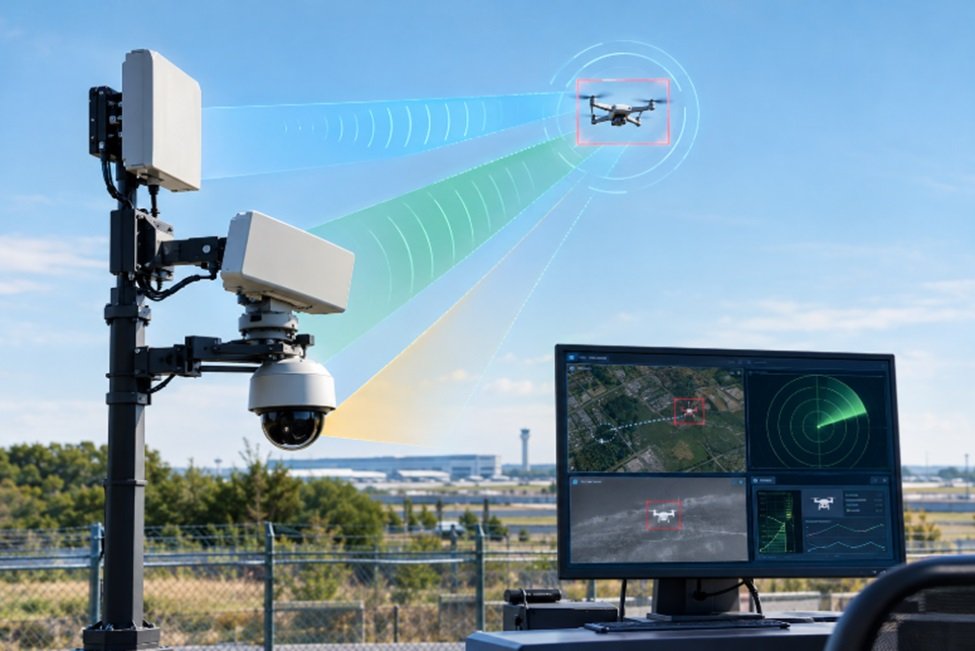
A comprehensive anti-drone
detection system can combine multiple technologies to provide security
teams with a clearer picture of what is happening in the airspace.
AirSentinel Drone Detection System
AirSentinel takes a layered approach
to drone detection.
Its Airspace Monitoring System (AMS)
sensor family provides RF and Remote ID sensing, with configurations designed
to detect supported Remote ID broadcasts and supported DJI drone intelligence.
AirSentinel's platform can then combine this information with physical radar
tracks and optical or thermal imagery.
AirSentinel also offers Atlas,
its intelligence platform. Atlas is designed to connect compatible sensors,
correlate information, provide historical context, and share intelligence with
other command-and-control and security platforms through APIs.
This makes AirSentinel more than a
standalone drone sensor. It is designed as part of a broader airspace
intelligence architecture.
Robin Radar Drone Detection System
Robin Radar specializes in radar
technology for detecting, tracking, and classifying small airborne objects.
Its IRIS radar is specifically
designed for drone detection. According to Robin Radar, IRIS provides
360-degree azimuth coverage and 60-degree elevation coverage, with a 5 km
instrumented range in its standard configuration. It uses micro-Doppler
classification and deep neural network technology to distinguish drones from
other objects such as birds.
IRIS is also designed for rapid
deployment. Robin Radar states that the system can be deployed in under 15
minutes and can operate while mounted on a vehicle or maritime platform. Its
on-the-move capability supports speeds of up to 100 km/h on land.
Robin Radar positions its radar
technology as a core sensor for wider counter-UAS systems, where radar can cue
other sensors and countermeasures.
AirSentinel vs Robin Radar: Key Differences
1. RF Detection vs Radar Detection
One of the biggest differences is the
primary sensing technology.
AirSentinel's AMS family is built
around RF and Remote ID sensing. This allows the system to obtain information
from compatible drone broadcasts, including aircraft identity and flight
information where available. AirSentinel can then add radar and optical sensors
to detect aircraft that may not provide useful RF information.
Robin Radar's IRIS, on the other hand,
is a dedicated radar system. It uses FMCW X-band radar and micro-Doppler
technology to detect and classify airborne objects based on their physical
movement.
For organizations wanting information
from drone RF signals, AirSentinel has an advantage. For organizations looking
for dedicated 3D physical tracking, Robin Radar's radar approach is
particularly compelling.
2. Remote ID Capabilities
Remote ID can provide valuable
information about compatible drones, including location, altitude, speed,
direction, and identification information.
AirSentinel makes Remote ID a core
component of its AMS architecture. Its current AMS V10, for example, is
designed for high-density Remote ID sensing and supports 2.4 GHz and 5.8 GHz
Remote ID reception.
Robin Radar's IRIS is primarily a
radar-based detection and classification system. Radar does not depend on a
drone broadcasting Remote ID to detect a physical target.
This creates an important distinction:
RF/Remote ID and radar answer different questions.
RF can provide information about what
is transmitting, while radar can physically detect and track an object even
when useful RF broadcasts are absent.
3. Detection and Classification
Robin Radar has a strong focus on
radar-based classification.
IRIS uses micro-Doppler technology and
deep neural networks to analyze rotating components and distinguish drones from
objects such as birds. Robin Radar states that the system can classify both
fixed-wing and hovering drones.
AirSentinel approaches classification
through available RF and Remote ID intelligence and can add radar and optical
systems for physical tracking and visual verification.
Its layered architecture allows RF to
provide identity and location information, radar to provide physical tracks,
and optical or thermal systems to help operators visually assess an object.
4. Coverage and Deployment
Robin Radar's IRIS provides 360-degree
coverage with accurate 3D information and is designed as a relatively
lightweight radar package. Robin lists the IRIS weight at 29 kg and states that
it can be deployed in less than 15 minutes.
AirSentinel's coverage depends on the
AMS configuration, antenna, installation, aircraft, and environment. The
company currently states that its systems can provide typical detection ranges
from approximately 1 to 12 miles depending on configuration and environment.
Therefore, buyers should not compare
advertised range numbers alone. Actual performance depends heavily on terrain,
buildings, RF interference, antenna placement, drone type, and system
configuration.
5. Integration With Other Security Systems
Integration is important when building
an anti-drone detection system.
AirSentinel describes its architecture
as open and states that Atlas can accept compatible third-party sensing and
send AMS and sensor-fusion intelligence to other command, security, and
intelligence platforms. It also integrates radar from Echodyne and optical
systems from vendors such as Axis and Bosch.
Robin Radar also emphasizes
interoperability. Its IRIS radar provides an integration-ready API and is
designed to connect with command-and-control systems and broader counter-UAS
ecosystems. Robin Radar states that its technology has more than 25 integrations.
Both approaches can therefore work as
part of a larger security architecture rather than functioning as isolated
devices.
Which Drone Detection System Is Better?
There is no universal winner.
AirSentinel may be a better choice if you need:
●
RF and Remote ID detection
●
Supported DJI drone
intelligence
●
Live airspace intelligence
●
Available pilot or
control-station information
●
An open sensor architecture
●
Integration with radar and
optical systems
●
Cloud and local API access
●
A platform that combines
multiple sources of airspace information
AirSentinel states that its AMS
sensors can deliver live-track data normally in under one second over cellular,
although actual performance depends on configuration and connectivity.
Robin Radar may be a better choice if you need:
●
Dedicated 3D radar detection
●
360-degree physical tracking
●
Micro-Doppler classification
●
Drone-versus-bird
classification
●
Fixed-wing and hovering drone
detection
●
On-the-move radar capabilities
●
A lightweight deployable radar
●
Radar integration into a wider
C-UAS network
IRIS provides 360-degree azimuth
coverage, 60-degree elevation coverage, and 3D tracking, with an instrumented
range of 5 km in its standard configuration.
AirSentinel vs Robin Radar: Which One Should You Choose?
The right solution depends on your
security requirements.
If your primary requirement is RF-based
drone intelligence, Remote ID detection, and integration of multiple sensing
layers, AirSentinel may be the more suitable platform.
If your primary requirement is 3D
radar-based detection, tracking, and classification, Robin Radar's IRIS is
a strong option.
However, these technologies can also
complement one another. In a layered anti-drone detection system, RF
sensing can identify available drone and control signals, radar can provide
physical tracking, and optical or thermal cameras can help operators visually
verify the target.
That is why organizations should
evaluate the entire security architecture rather than choosing a system based
only on a single feature.
Final Verdict
When comparing AirSentinel vs Robin
Radar, the biggest difference is their primary approach to drone detection.
AirSentinel focuses on RF and Remote
ID intelligence while providing a path to integrate radar and optical sensors
through Atlas. Robin Radar focuses heavily on high-performance radar, with IRIS
providing 360-degree 3D detection, tracking, and micro-Doppler classification.
For organizations looking for a
flexible, multi-layer airspace intelligence platform, AirSentinel is worth
considering. For organizations that need dedicated 3D radar detection and
classification, Robin Radar can be a strong choice.
Ultimately, the best drone
detection system is the one that matches the site's threat profile,
coverage requirements, drone types, environmental conditions, and existing
security infrastructure.

 BLOG · SEP 26, 2026