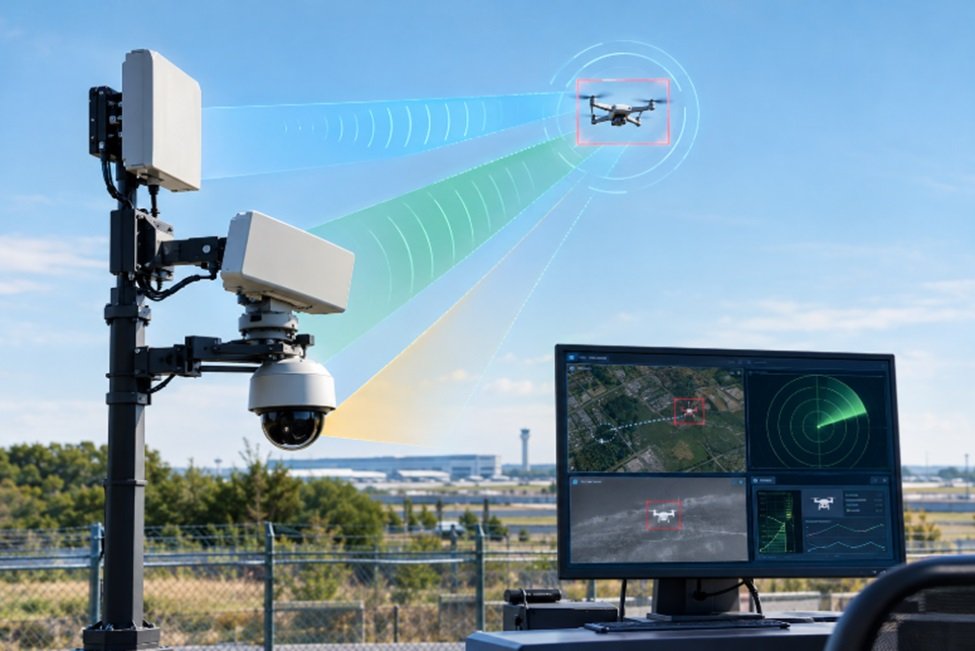
As drones become more common around
airports, critical infrastructure, industrial facilities, public events, and
other sensitive locations, organizations need reliable ways to identify and
monitor unauthorized aircraft. This has increased demand for advanced drone
detection systems and anti-drone detection systems that can
provide real-time airspace awareness.
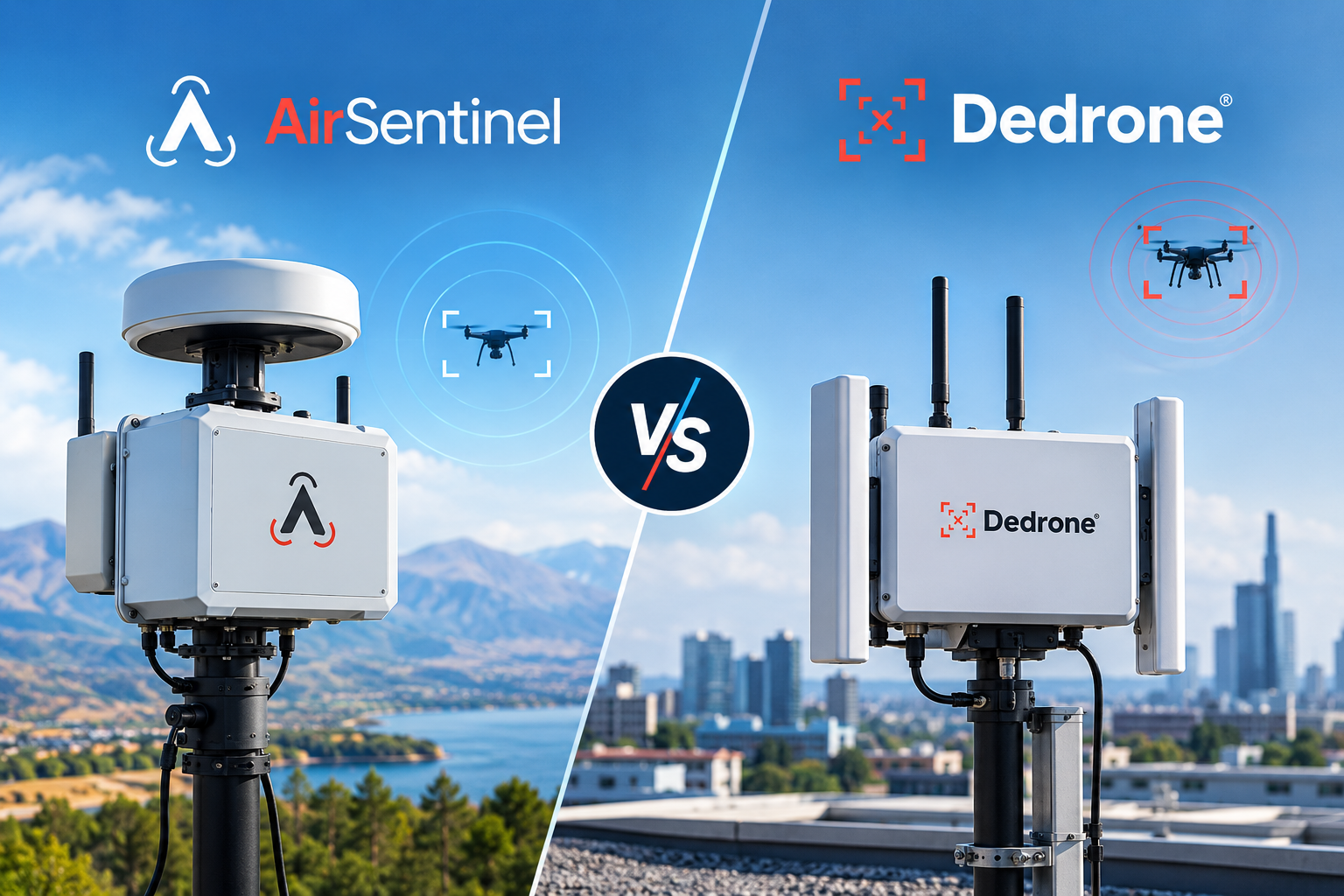
Two names that frequently come up when
evaluating drone detection technology are AirSentinel and Dedrone.
Both companies offer technologies
designed to detect, identify, and track drones, but they take somewhat
different approaches. So, which drone detection system is better?
The answer depends on the
organization's operational requirements, the type of drones it needs to detect,
the sensing technologies required, and how the system needs to integrate with
existing security infrastructure.
What Is a Drone Detection System?
A drone detection system is designed
to identify and monitor unmanned aircraft operating within a defined area.
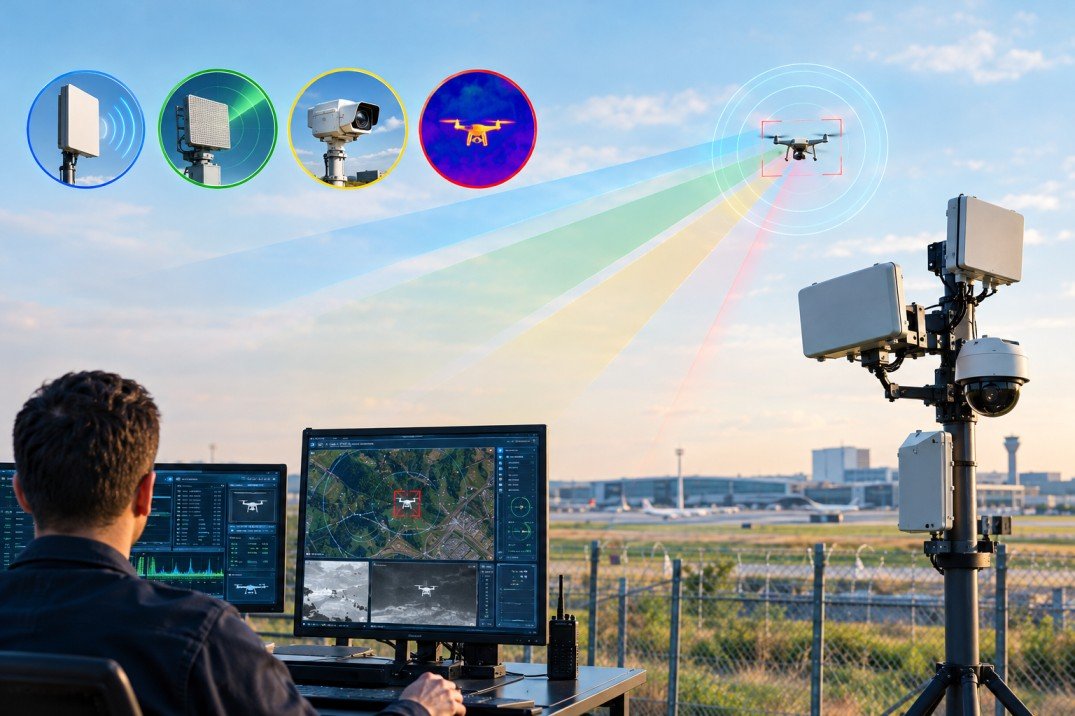
Modern systems can use technologies
such as:
●
Radio frequency (RF) sensing
●
Remote ID detection
●
Radar
●
Optical and thermal cameras
●
Sensor fusion
●
Artificial intelligence
●
Direction finding and
geolocation
A complete anti-drone detection
system can provide security teams with information about where a drone is
located, how it is moving, and, depending on the technology and aircraft,
additional information about its identity or operator.
AirSentinel: Drone Detection Approach
AirSentinel's Airspace Monitoring
Systems (AMS) are built around RF and Remote ID sensing, with different
configurations designed for different operational requirements.
The AMS family includes the AMS V10,
AMS Pro, and AMS Pro Max. The V10 focuses on high-density Remote ID sensing,
while Pro configurations add capabilities for supported DJI signals and
advanced supported drone identification.
AirSentinel also offers a layered
approach. Its architecture can combine AMS RF sensing with Echodyne radar and
optical or thermal cameras. This allows security teams to combine different
sources of information rather than relying on one detection technology.
Another important part of
AirSentinel's platform is Atlas, which connects sensor information and
provides APIs for integration with existing command, control, security, and
intelligence platforms.
Dedrone: Drone Detection Approach
Dedrone takes a broad sensor-fusion
approach to airspace security.
Its DedroneTracker.AI platform can
process information from multiple types of sensors, including RF, radar, video,
and acoustics. The platform uses this information to detect drones, determine
drone and pilot locations, and prioritize potential threats for operators.
Dedrone also offers a range of RF
sensors. Its current sensor portfolio includes the RF-160, RF-310, RF-360, and
RF-560, with capabilities for drone detection, classification, and
localization. Dedrone states that its RF sensors can identify a wide range of
commercial, hobbyist, and homemade drones.
This makes Dedrone a strong option for
organizations looking for a broader counter-UAS ecosystem built around sensor
fusion and threat analysis.
AirSentinel vs Dedrone: Key Differences
1. Detection Technology
AirSentinel's AMS platform places
significant emphasis on RF and Remote ID intelligence. Depending on the
configuration, AMS can receive Remote ID broadcasts and supported DJI O1–O4
OcuSync Drone ID signals. AMS Pro Max adds advanced supported DJI and selected
Autel capabilities.
Dedrone also uses RF detection but
combines it with other sensor types through DedroneTracker.AI. Its ecosystem
supports RF, radar, video, and acoustic inputs.
For organizations primarily interested
in RF and Remote ID intelligence, AirSentinel may be an attractive option.
Organizations wanting a broader multi-sensor threat-detection platform may
prefer Dedrone's approach.
2. Remote ID Detection
Remote ID is increasingly important
because it can provide information such as aircraft identification, position,
altitude, speed, direction, and, where available, control-station information.
AirSentinel's AMS Remote ID receiver
supports Bluetooth and Wi-Fi Remote ID reception across supported
configurations. The company states that configured sensors can track hundreds
of supported targets simultaneously.
Dedrone also supports Remote ID but
emphasizes that Remote ID alone should not be considered a complete
airspace-security solution because drones can operate without transmitting
Remote ID information.
This is an important consideration
when selecting an anti-drone detection system. Remote ID should
generally be considered one layer of detection rather than the entire security
strategy.
3. Sensor Integration
AirSentinel is designed with an open
architecture. Its Atlas platform can ingest compatible third-party RF, radar,
optical, and ADS-B information and send available intelligence to external C2
and security platforms through APIs.
Dedrone similarly emphasizes sensor
fusion through DedroneTracker.AI, combining multiple sensor types to create a
more comprehensive airspace picture.
For buyers, the important question is
not simply which company has more sensors. It is whether the system can
integrate with the organization's existing security and command infrastructure.
Which Drone Detection System Is Better?
There is no universal winner between
AirSentinel and Dedrone.
AirSentinel may be a strong choice
if you prioritize:
●
Remote ID and RF-based drone
intelligence
●
Supported DJI signal detection
●
Scalable AMS sensor
configurations
●
Open APIs
●
Integration with existing C2 or
security platforms
●
A layered architecture
combining RF, radar, and optical systems
●
Real-time airspace intelligence
AirSentinel states that its AMS
sensors can provide live-track data through cellular connectivity, with typical
delivery in under one second depending on configuration and connectivity.
Dedrone may be a strong choice if
you prioritize:
●
Multi-sensor drone detection
●
RF, radar, video, and acoustic
inputs
●
Drone and pilot localization
●
AI-based threat analysis
●
Large drone protocol libraries
●
A broader counter-UAS security
ecosystem
Dedrone says its DedroneDNA library
covers more than 200 drone types from 70 manufacturers, including DJI, Zala,
and various FPV and homemade drones.
AirSentinel vs Dedrone: What Should You Consider?
Before purchasing a drone detection
system, organizations should evaluate more than the brand name.
Consider:
Detection coverage: How large is the area that needs to be monitored?
Drone types: Do you need Remote ID detection only, or must you detect
non-cooperative and non-Remote-ID aircraft?
Integration: Can the system connect to your existing security, C2, or
intelligence platform?
Identification: What information can the system provide about the aircraft?
Sensor fusion: Do you need RF, radar, cameras, thermal imaging, or multiple
sensing technologies?
Scalability: Can additional sensors be added as your security requirements grow?
Operational workflow: How quickly can your security team understand and respond to a
detected flight?
Final Verdict
When comparing AirSentinel vs
Dedrone, the better choice depends on the mission.
AirSentinel offers a flexible
architecture centered around AMS RF and Remote ID sensing, with Atlas providing
sensor integration, APIs, historical context, alerting, and connectivity to
other platforms. Its architecture can also incorporate radar and optical
systems for layered detection.
Dedrone provides a mature multi-sensor
approach centered around DedroneTracker.AI, with RF, radar, video, and acoustic
sensing capabilities designed to support comprehensive airspace security and
threat prioritization.
Ultimately, the best anti-drone
detection system is the one that matches your site's threat profile,
coverage requirements, drone types, integration needs, and operational
workflow.
For organizations evaluating both
solutions, a practical approach is to define the detection requirements first
and then compare AirSentinel and Dedrone against those specific requirements
rather than choosing solely based on brand, features, or price.
This can also be strengthened for SEO
with a comparison table, FAQ section, meta title, meta description, and
“AirSentinel vs Dedrone” schema-friendly headings.
Frequently Asked Questions
1. What is a drone detection system?
A drone detection system is a security
solution designed to identify, locate, and monitor drones operating within a
specific area. Depending on the technology, it may use RF signals, Remote ID,
radar, cameras, thermal imaging, or multiple sensors.
2. What is an anti-drone detection system?
An anti-drone detection system is
designed to detect and track unauthorized or potentially suspicious drones. It
can form the detection layer of a broader counter-UAS security solution.
3. Is AirSentinel better than Dedrone?
Neither system is universally better.
AirSentinel can be a strong option for organizations prioritizing RF and Remote
ID intelligence, open integrations, and scalable sensor configurations. Dedrone
may be better suited to organizations looking for a broader multi-sensor
counter-UAS platform.
4. Does AirSentinel detect Remote ID?
Yes. AirSentinel's AMS solutions
support Remote ID detection, allowing organizations to receive information from
compatible drones that broadcast Remote ID signals.
5. Does Dedrone detect Remote ID?
Yes. Dedrone supports Remote ID as
part of its broader drone detection capabilities. However, Remote ID is only
one detection method, and not every drone will necessarily provide Remote ID
information.
6. Can AirSentinel detect drones that do not
broadcast Remote ID?
AirSentinel offers configurations with
additional RF capabilities designed to detect and identify certain drones
beyond standard Remote ID detection. The exact capabilities depend on the AMS
configuration and supported drone protocols.
7. What technologies do AirSentinel and Dedrone
use?
Both platforms can use RF-based
detection, while their broader architectures support additional sensing
technologies. AirSentinel can integrate RF, radar, optical, and thermal sensors
through its platform, while Dedrone's ecosystem can combine RF, radar, video,
and acoustic data.
8. Which is better for critical infrastructure,
AirSentinel or Dedrone?
Both can be considered for critical
infrastructure, but the right choice depends on the site's requirements.
Organizations should compare detection coverage, sensor types, integration
capabilities, drone identification, scalability, and operational requirements
before selecting a system.
9. How much does a drone detection system cost?
Drone detection system pricing varies significantly depending on the technology, detection range,
number of sensors, software, installation, integrations, and subscription
requirements. AirSentinel publishes pricing for several AMS configurations,
while enterprise deployments may require customized pricing.
10. Can AirSentinel and Dedrone be integrated
with other security systems?
Yes. Integration is an important part
of both platforms. AirSentinel's Atlas platform provides APIs and supports
integration with compatible third-party sensors and command-and-control
systems. Dedrone also supports multi-sensor integration through its software
platform.

 BLOG · SEP 28, 2026